


Chapter 1:
A Pioneering Partnership
The Role of the Arts
in Healthcare
Progress Report
2018 – 2024
Table of Contents
Why Arts in Health?
by Laurie M. Tisch
Developing the Arts in Health initiative
by Rick Luftglass
The Power of the Arts to Build Strong Communities, Improve Health and Healing and Foster Flourishing
by Susan Magsamen
Rockefeller Philanthropy Advisors Insights: Trust, Innovation, and Impact
by Latanya Mapp
What Does Impact Look Like?
by Rick Luftglass
Dive deeper into the Arts in Health report by exploring the case study pages:
NYC H+H Partnerships [ ↗︎ ], Mental Health [ ↗︎ ], and Aging-Related Diseases [ ↗︎ ].
A Pioneering Partnership: NYC Health + Hospitals
When the Illumination Fund launched the Arts in Health initiative, one of its first and most significant grants was awarded to NYC Health + Hospitals. The partnership was a natural fit, as their mission to provide healthcare to all, regardless of circumstances, aligns closely with the Illumination Fund’s commitment to ensuring access and opportunity for all New Yorkers while fostering healthy, vibrant communities.
With an initial $1.5 million grant, NYC Health + Hospitals established its Arts in Medicine department, consolidating previously scattered arts programs and collection management under a unified team and piloting innovative arts programs to support staff wellness. The collaboration’s success led the Illumination Fund to double its investment in 2021 with a new $3 million grant to expand programming and enhance staff support.
This chapter was compiled from interviews conducted by Rick Luftglass, Kira Pritchard, and Jan Rothschild in the summer of 2024.

Dr. MITCHELL KATZ, President and Chief Executive Officer, NYC Health + Hospitals
NYC Health + Hospitals (H+H) is the largest municipal hospital system in the country. It’s important and different than all the other municipal systems because it’s the only one which is large enough to reach everyone in New York City who wants to be seen at a public hospital. We have the most powerful mission. We are the only system in New York City that cares for people regardless of their economics under a single standard. And central to us is this idea that everybody gets the same level of care.

LAURIE TISCH
My family supports many important hospitals in New York, but when we launched Arts in Health in 2018, it was natural for us to make the City’s public hospital system an anchor for the initiative. It aligns perfectly with our mission. NYC Health + Hospitals seeks to serve all New Yorkers, no matter their ability to pay, gender identity, or immigration status — without exception. That’s truly access, opportunity, and community.
Public hospitals are not typically on the radar of most philanthropists, but they have many excellent and essential programs and services that necessitate philanthropic support. With the arts, NYC Health + Hospitals couldn’t afford to dream big. With our support they can. Our partnership has been transformative. Along with delivering great programming, they are measuring impact, innovating, and expanding the field of Arts in Health.
Dr. ERIC WEI, Senior Vice President, NYC Health + Hospitals, and Chief Executive Officer, NYC Health + Hospitals/Bellevue
When Dr. Katz and I came to NYC Health + Hospitals, we immediately saw that the staff was hurting. People had been operating under this black cloud of a $1.8 billion deficit. Which hospitals are going to close? Which services are going to be cut? How are we going to reduce head count?
We said, ‘no, no, no. We’re going to bring something for the staff.’ And so really putting the focus back on our most precious resource, which is our people — providing support for emotional and psychological trauma, figuratively refilling their tanks so that they can provide the highest quality, safest care and the best care experience possible. That was our first priority. So we implemented Helping Healers Heal, a peer-to-peer employee wellness program Mitch and I had piloted in Los Angeles to support the emotional and psychological well-being of our healthcare workers.
Dr. MITCHELL KATZ
When I joined Health + Hospitals in 2018 there were many surprises, but I think one of the biggest surprises was that there was this huge art collection. And I was hearing suggestions that we build a humidified storage area for the art and fund programs for the art. I’m like, whoa, if I had money, I’d be building something for my patients and staff, not for the art. But I thought there must be a way to bring these two things together to form a bond of using the art collection in a way that furthers our mission. And that’s where philanthropy, and in particular the Laurie M. Tisch Illumination Fund, came in — because we needed a way to bridge this gap.
RICK LUFTGLASS
In 2018, in our initial meetings with CEO Mitchell Katz and his team, we explored H+H’s needs, priorities, and ideas. Was there an interest in connecting the arts to their healthcare mission? Were there existing programs? And they told us “We have an enormous art collection; we have arts programs that benefit patients, but they are disparate and not coordinated centrally. We have arts programs that are community facing, not system wide. But we have nothing for staff. If the arts can help our staff, that would be our priority.”
That was a crystallizing moment for us. Since mental health was already a major focus of the Illumination Fund’s Arts in Health initiative, the issue of mental health of the hospital staff resonated with us. Physician burnout is well known, but the stigma of getting mental health support is also an impediment for seeking help. Their expressed need inspired us to move forward.
Dr. ERIC WEI
After our initial conversations with Laurie and Rick at the Illumination Fund, we put together a plan to create the Arts in Medicine department. We recruited Linh Dang, who worked at Kings County and had previously managed the arts in medicine program at Stanford University, Medical Center, to build the new department and develop the programming at H+H, not only for more patients in more facilities, but also programs specifically designed to address staff burnout and compassion fatigue to go alongside Helping Healers Heal (H3).
RICK LUFTGLASS
Linh came back to us with a system-wide strategy. The plan outlined two overarching goals:
- To replicate and expand specific arts-based programs to reach facilities that were otherwise underserved.
- To create new programs to engage staff in activities that would relieve stress, foster collaboration, improve the work environment, build organizational pride, improve patients’ experiences, and increase community engagement.
Our initial $1.5 million grant was the largest in our Arts in Health initiative. In February of 2019 we announced the partnership at a press conference with former First Lady Chirlane McCray.
Dr. MITCHELL KATZ
Art is one of the things that causes awe. Awe is good for people’s mental health. Awe makes people enjoy their workplace. Coming to work feeling good about your job makes you a better caretaker. You want happy patients, you need happy doctors, happy nurses, happy social workers. So, part of the answer to that was to get the art collection out of storage, get it into the facilities and use it now. I think that was big goal one. The art provokes thought, the art makes people feel like they have a common vocabulary.
But big goal two — and again, I give a lot of credit to Laurie and the Illumination Fund for helping us see this — was to bring people together to make new art. The collection is large and important, but it was not relevant to everybody in Health + Hospitals. It was not a living collection. It was not growing. To make the collection relevant we had to find a way to involve everyone in it, including our hospital communities.
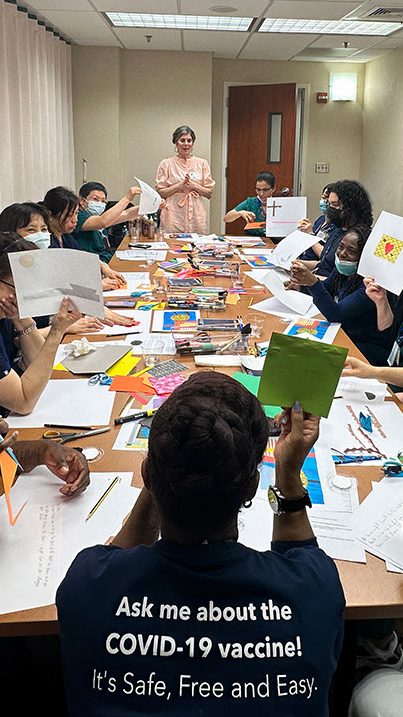
HHArt of Medicine is a signature program to address staff burnout and compassion fatigue. Credit: NYC Health + Hospitals
Arts in Medicine at NYC Health + Hospitals is part of a systemwide strategy to support workforce wellness
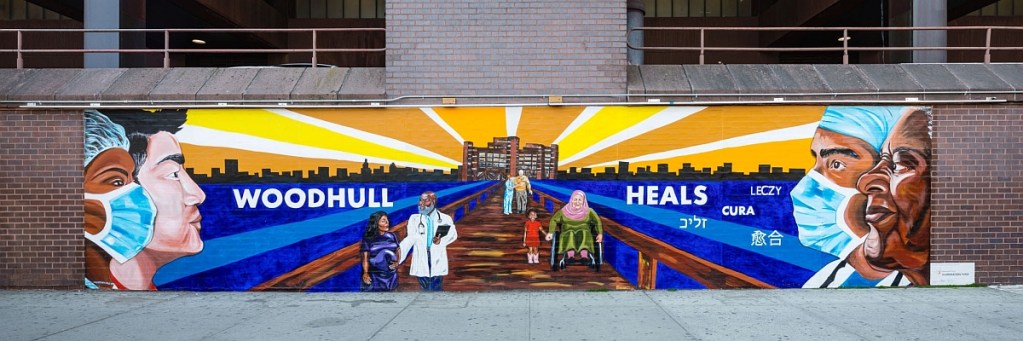
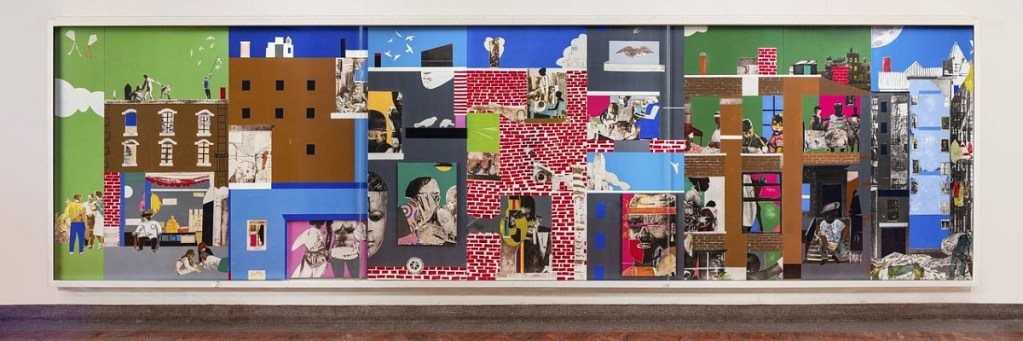
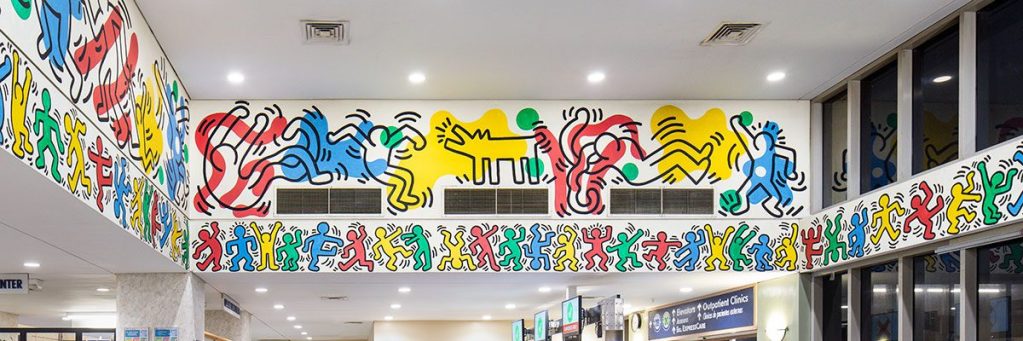
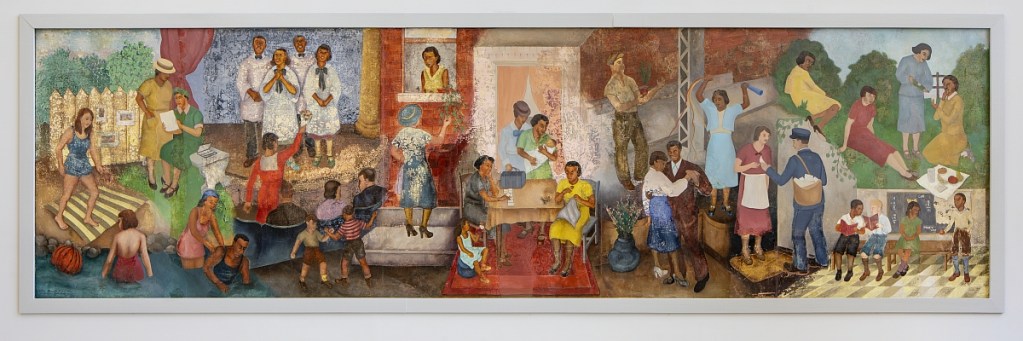
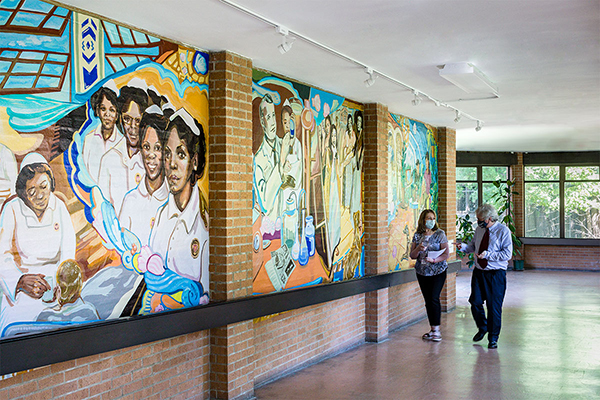
Decades of Murals:
Georgette Seabrooke (NYC Health + Hospitals/Harlem, 1937), Romare Bearden (NYC Health + Hospitals/Bellevue, 1976), Keith Haring (NYC Health + Hospitals/Woodhull, 1986), Imani Shanklin Roberts (NYC Health + Hospitals/Woodhull, 2020). Credit: NYC Health + Hospitals
Community Mural Project
LAURIE TISCH
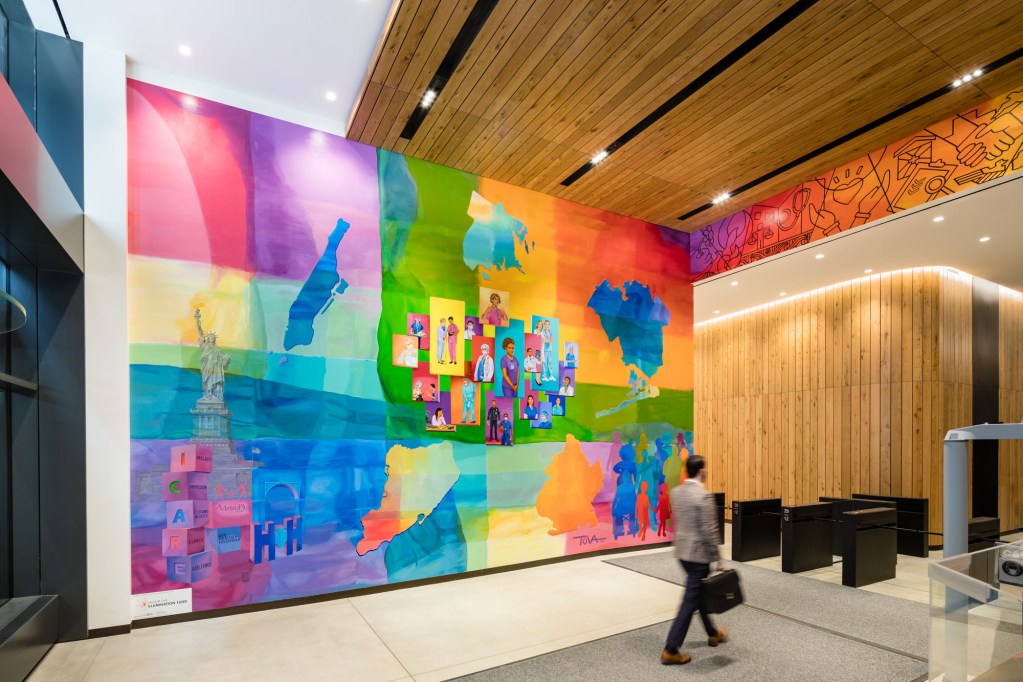
The most visible arts program at NYC Health + Hospitals has been the Community Mural Project, which is one of the first new programs launched in 2019. It is one of the best, most exciting and fun projects that I have seen in my close to 50 years in philanthropy. It is specifically designed to bring the communities, the hospital staff, and patients together to imagine and then create artworks that become a permanent part of the facility. The activity of creating murals breaks down barriers and it’s also just a lot of fun. It makes people happy, it relieves stress, it builds teamwork, and it bolsters pride in the hospital. The Community Mural Project was an enormous success from the very first mural.
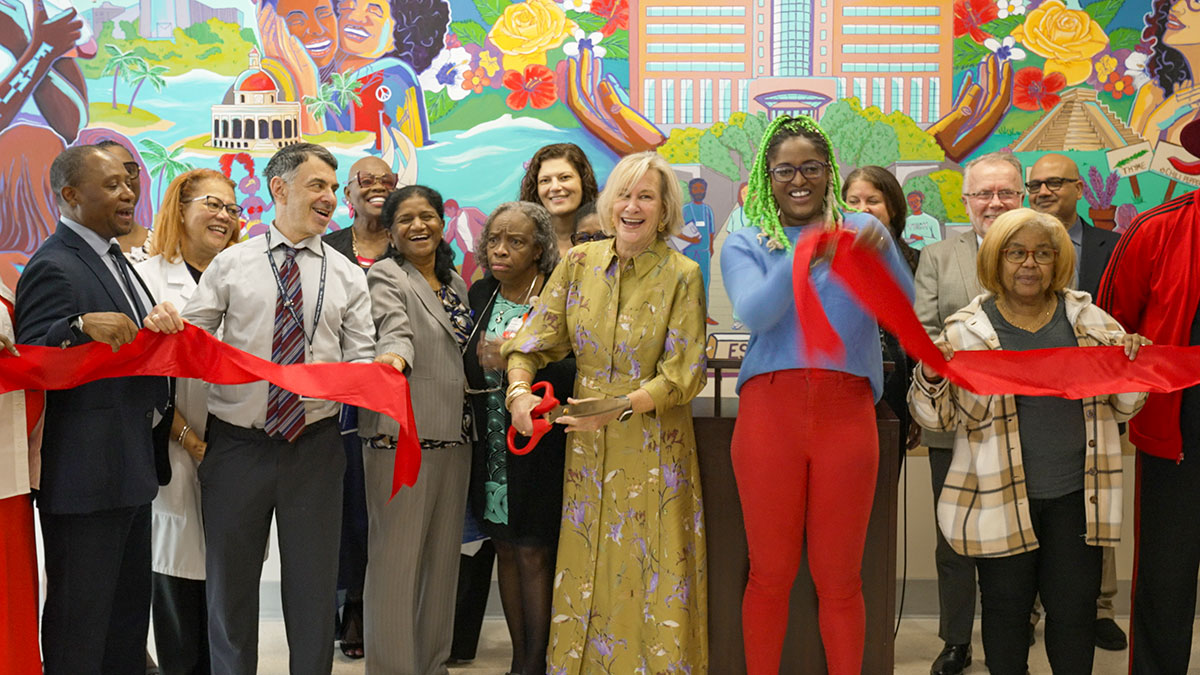
Community murals culminate with a joyous ribbon cutting, celebrating the community. Credit: NYC Health + Hospitals

LARISSA TRINDER, Assistant Vice President, Arts in Medicine, NYC Health + Hospitals
In 2022, when I was hired for the Arts in Medicine department, COVID-19 was still a major concern, and staff burnout was high. Linh had established strong programs for staff, patients, and the community, but the pandemic forced us to reassess and adapt these initiatives. The demand for our services outpaced our capacity, and we needed partners to expand and enhance our offerings, particularly in areas like collection management and high-impact programs.
Our department’s integration into the Quality and Safety Cabinet, which oversees key functions like care experience and staff wellness, highlights the essential role of Arts in Medicine within the system. Our programs are mapped directly to system priorities. Our primary question is: How can the arts be utilized to address a constantly changing health environment? How can the arts help address the multifarious challenges that are presented? We develop programming that is evidence-based, that has demonstrable benefits and that can be replicated across the system to reach more people.
We collaborate with H+H’s Wellness Directors to tailor arts interventions for staff teams at risk of burnout. We are looked to as part of a larger strategy to develop programs to address staff needs. We then closely measure and evaluate each program to ensure positive outcomes. By aligning with other internal groups, we believe Arts in Medicine has an impact on retention and overall job satisfaction. The staff survey results demonstrate the value of this integration.
As we expanded, so did our goals, leading to the development of a research strategy, a refined approach to exhibitions, increased community engagement, and enhanced music offerings. Recognizing our growing needs, the Illumination Fund awarded us $3 million in 2023 so that we could expand programming and serve more people.
The diverse needs of our staff and patients, including trauma processing and mental health stigma, underscore the importance of arts in healthcare. While we have a significant art collection, we lack expertise in some arts disciplines crucial to healthcare. Thanks to Laurie, Rick, and the Illumination Fund’s network, we’ve gained valuable partnerships and resources for ongoing program development.
Dr. MITCHELL KATZ
I love the new murals. I love the idea that patients and staff were involved in painting them. And people would point out what they had painted. And clearly that made them part of the art and it increased the sort of therapeutic value of it. Health is not just the absence of disease. Health is all of the positive things that people bring to it, that environments bring to it.
Dr. ERIC WEI
Throughout 2019, we saw real benefits to our staff and patient population from the Arts in Medicine programming. There was a lot of momentum and enthusiasm. But the pandemic changed everything. We saw demands on our system that had not been experienced in at least a century. There was an even greater need for staff wellness programs, but we weren’t sure how we could deliver programs safely. So, we paused everything until we could figure it out. Laurie and Rick were right there with us, supporting our efforts and asking how they could help.
RICK LUFTGLASS
In March 2020 everything stopped. Hospital leadership came to us and said, “We want to continue, but we’re just not sure how because we are at the epicenter of the pandemic.” And then the staff at Arts in Medicine polled the hospital CEOs and they said, “Give us a few months. We’ll do virtual focus groups. We’ll do socially distanced paint parties, but we want to get this program back up and running. We need it.” And that led to more murals in 2020 and 2021, with a new group of murals planned through 2025.
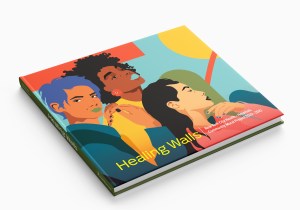

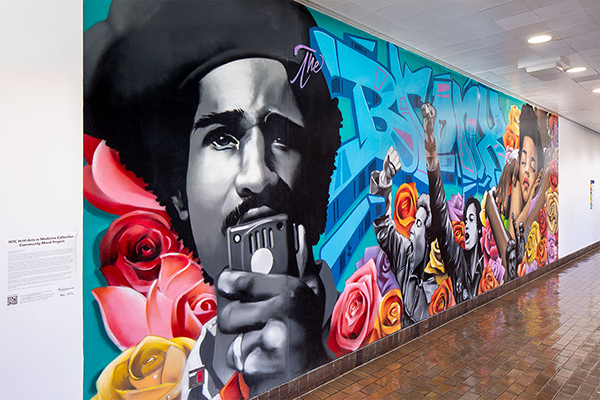
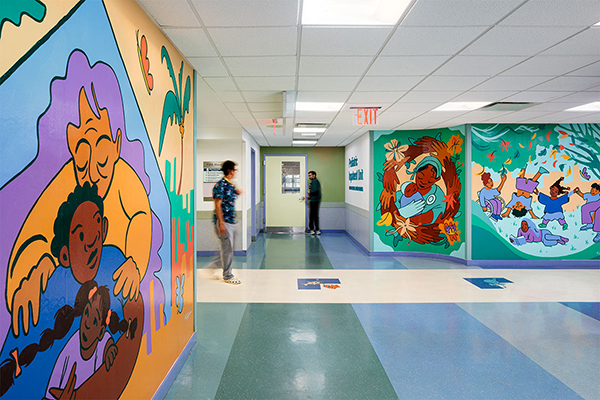
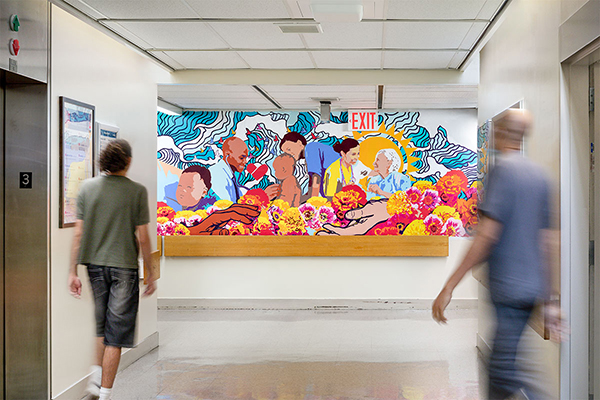
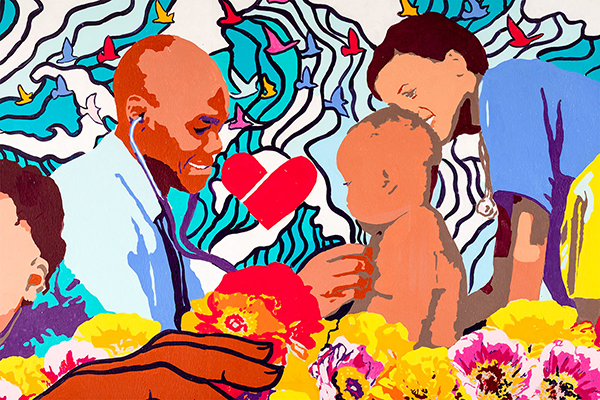

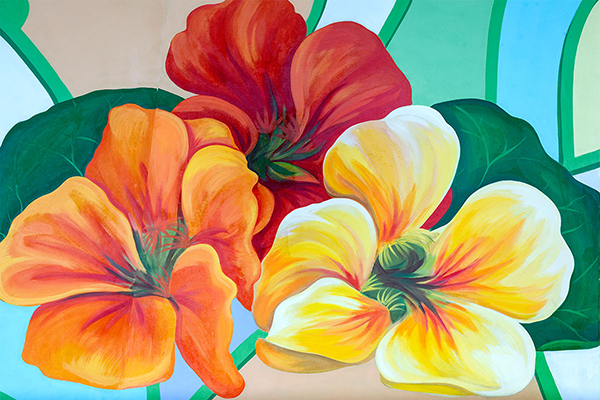
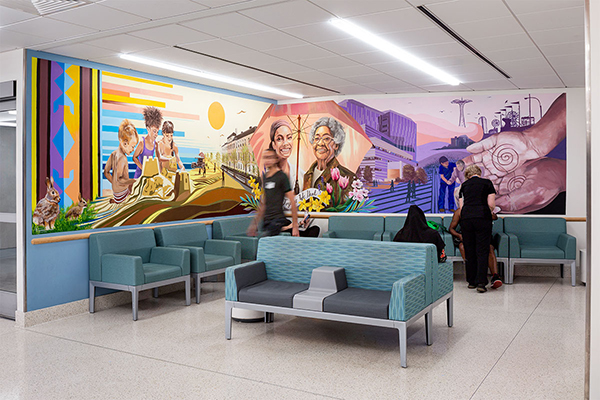
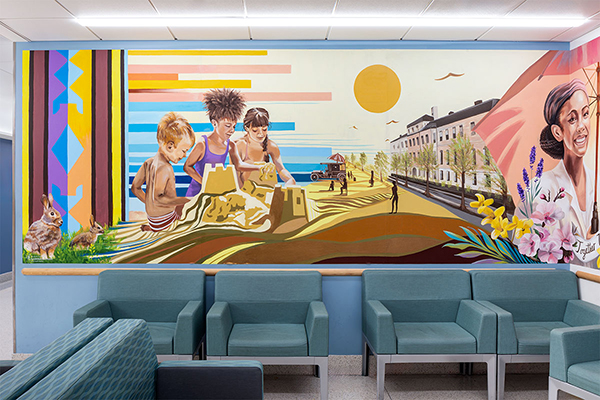
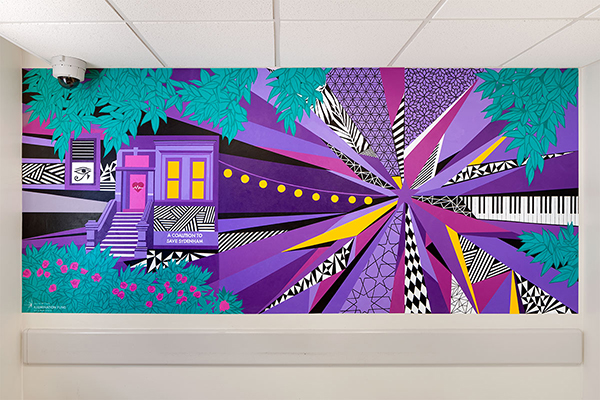
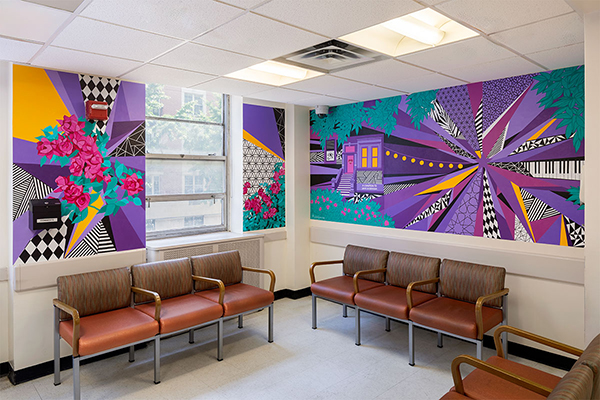




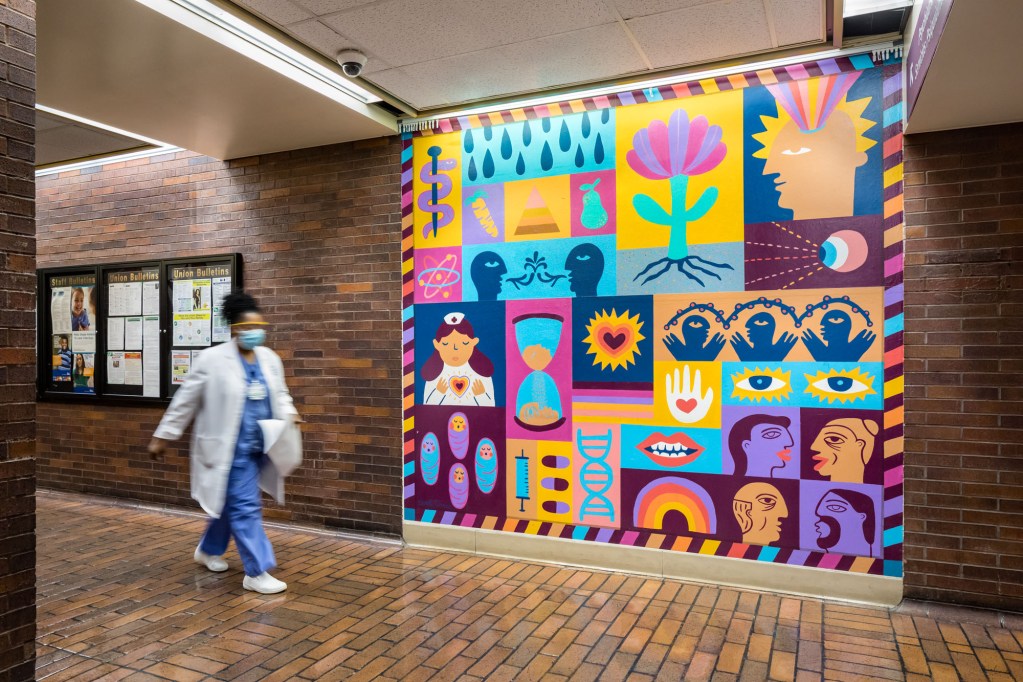
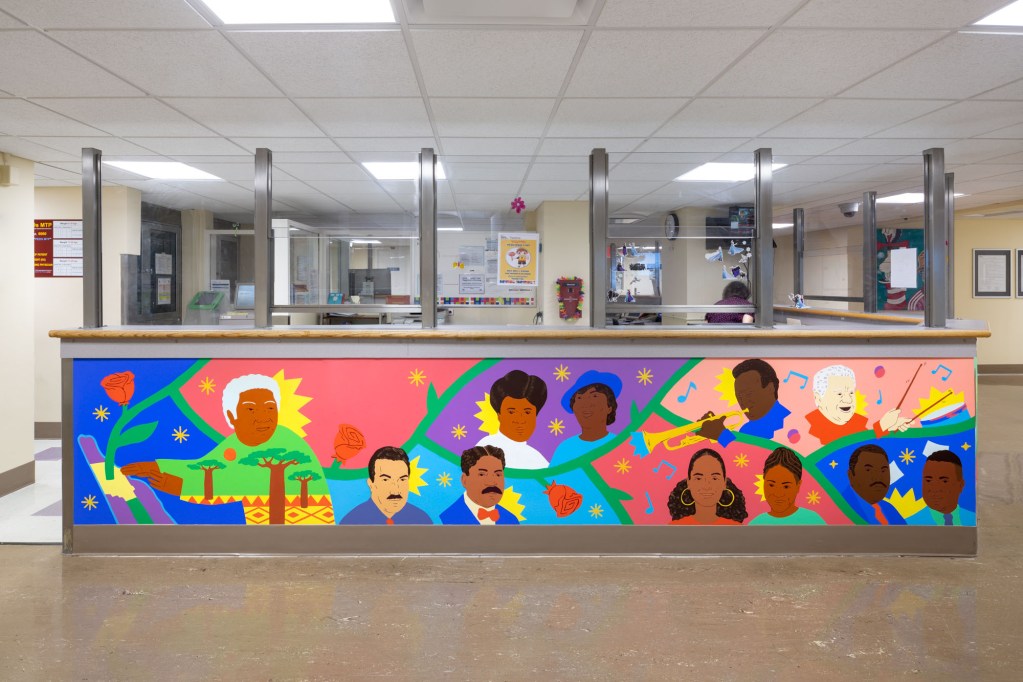
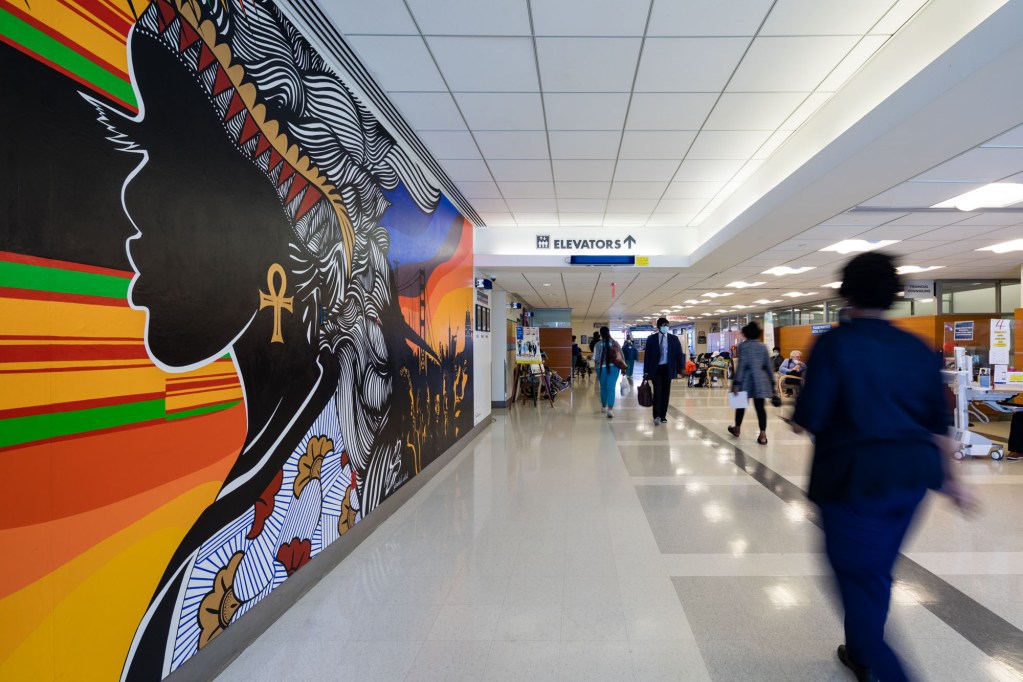
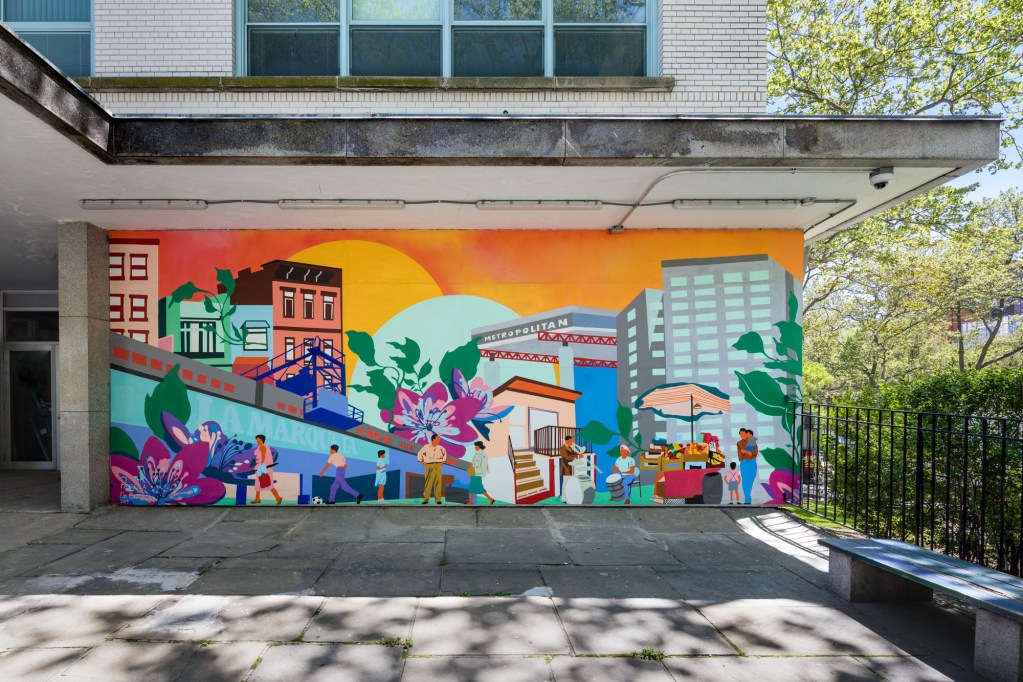
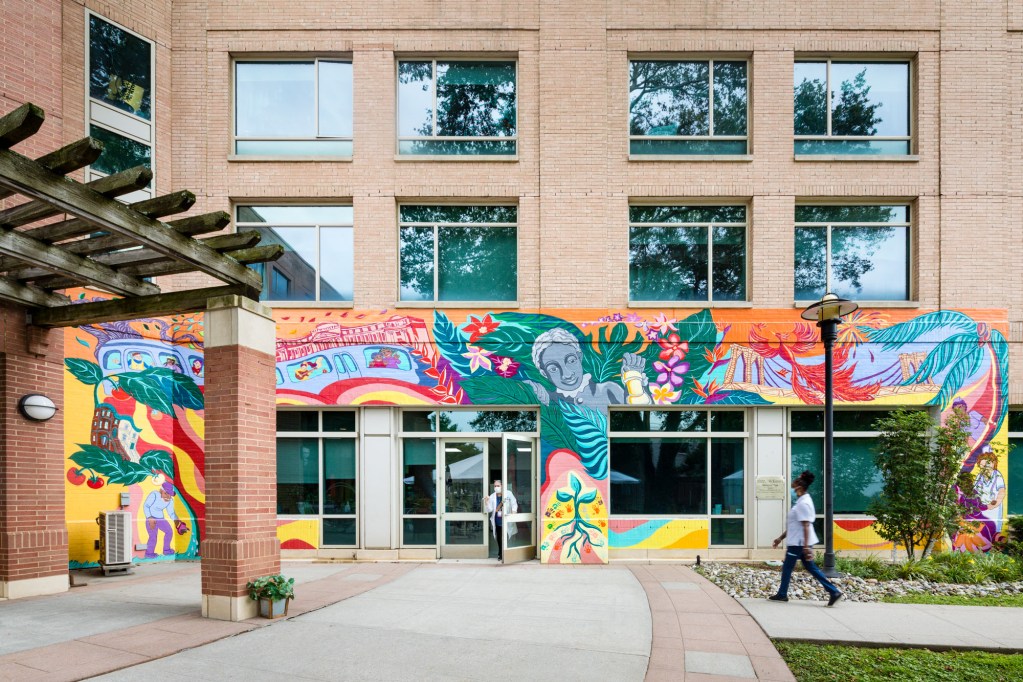
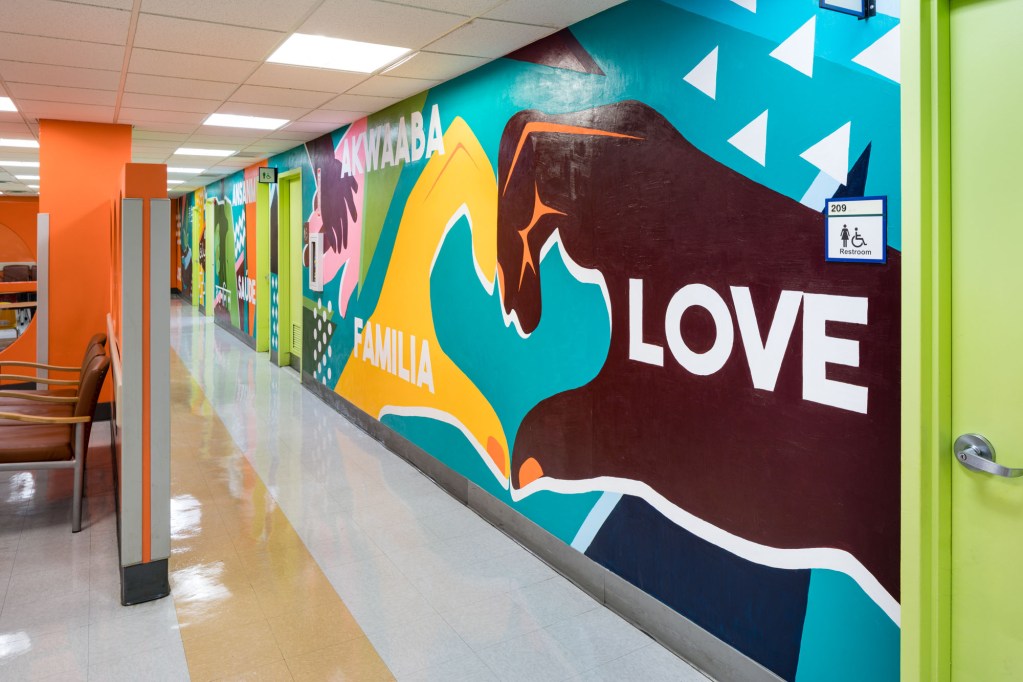
NYC H+H/Gotham Health, Cumberland: Murals by Jessie Novik. Dister Rondon, Cindy Lozito, Sophia Victor, Sophia Victor, Zeehan Wazed, Dannielle Tegeder, Kristy McCarthy, Stephanie Costello, Arantxa X. Rodriguez, Frank Parga. Healing Walls: book by the Laurie M. Tisch Illumination Fund.
Community Mural Project 2024
Murals across healthcare facilities in New York City
HHArt of Medicine
RICK LUFTGLASS
HHArt of Medicine (pronounced “Heart of Medicine”) is a great example of the power of partnerships. The program is based on an art observation exercise developed for medical students to help them build their diagnostic skills, build empathy, and establish team cohesion. The model has been transformed for the hospital environment. Linh piloted the program in 2019 and began building partnerships — first with the founder of a grantee cohort member, and then with museums, primarily the Brooklyn Museum. When Larissa came in, she saw the real need to expand this program and has created new partnerships, including with the Whitney.
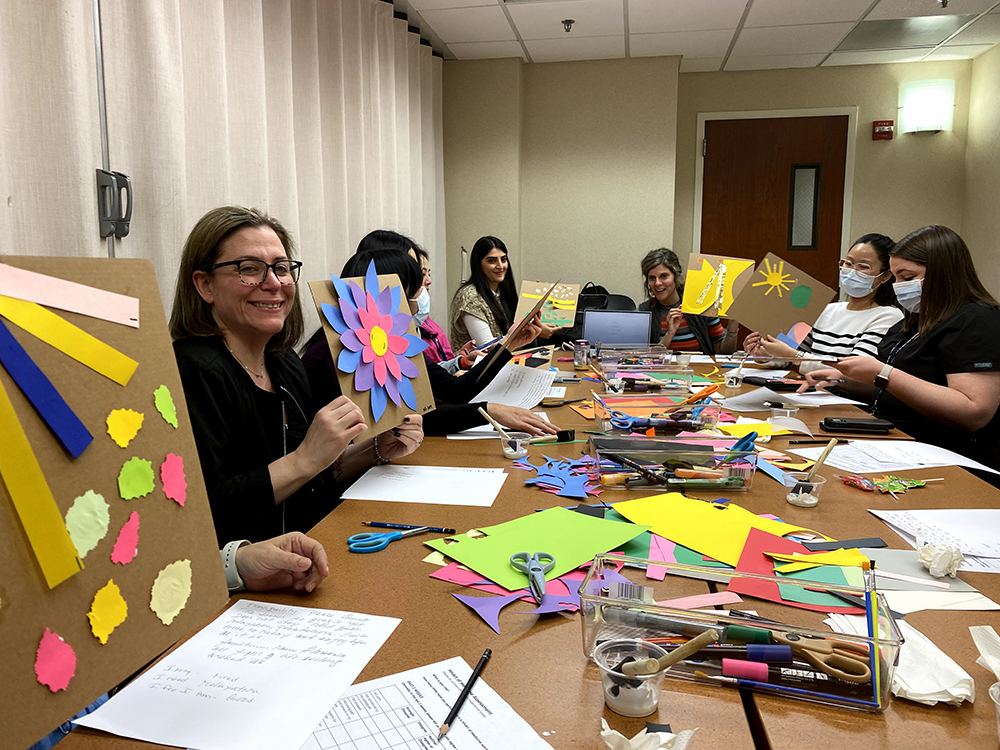
Staff reflect on their experiences through artwork-led discussions, artmaking and reflective writing.
Read More +
CRIS SCORZA, Chair of Education,
Whitney Museum of American Art
I became aware of Arts in Medicine at Health + Hospitals through Laurie Tisch, who’s a Whitney trustee and longtime supporter of the education programs here. Laurie suggested I meet Larissa Trinder at Health + Hospitals. When we met, we had a conversation that really shed light on the potential of our collaboration.
LARISSA TRINDER
Staff wellness is an overarching system priority. HHArt of Medicine is one of our most effective staff-facing programs. Inherent in the program is the ability to build empathy and connect teams more closely to one another, and I only see the program growing. It has health benefits, and it also highlights the important contribution that art collection provides as an additional tool in healing.
“Art is always a way for me to release stress, so I truly enjoyed the experience in our sessions of HHArt of Medicine. It is an exercise that’s been therapeutic for me, and I would love for other staff members to experience the same thing.”
Edwine Joseph,
Nurse Educator
NYC Health + Hospitals/Gouverneur
LARISSA TRINDER
HHArt of Medicine is a trauma-informed immersive art experience for clinical and non-clinical teams to connect with each other. Our team works closely with our Wellness Directors to develop a safe and supportive environment to share and create with one another. At each session, the museum educator uses open-ended dialogue focusing on a work of art from Health + Hospital’s collection, the art therapist provides time for personal reflection, and then the participants make art that may or may not reflect what they saw but expresses their own emotions. It provides a space for our staff to experience joy and relaxation in community with each other.
Experiencing and creating art in community with others impacts our physiology and biology. It can lower cortisol levels and increase dopamine, serotonin, and oxytocin. Art also enhances our ability to process emotions, nurture empathy, and foster greater connectedness.
CRIS SCORZA
Many people have written about the evidence of how looking at art benefits our brain. It allows us to connect with part of our brain that is not always active. That allows us to slow down, take deep breaths in the process without us even noticing. We want more people to be exposed to tools and techniques that help them slow down and heal and show them ways in which they can almost pull them out of a rut as they’re going about their day. We want people to realize that through observation they can bring a healing moment, a respite to their every day, and then be able to connect to new ideas.
HHArt of Medicine Program Impact
- Stress relief: In 2023, 85% of HHArt of Medicine participants in the HHArt of Medicine program reported significant stress before sessions, and 80% felt little to no stress afterward. Participants described feeling “inspired, relaxed, and destressed.”
- Fostering connections: 84% believed the program strengthened their connections with peers, patients, and loved ones. Participants appreciated learning more about their colleagues and shared experiences, noting how group discussions influenced their own perspectives.
- High demand: 98% expressed a desire to attend more programs, emphasizing the value of different perspectives and the program’s positive impact.
- Respite and connection: 100% of participants wanted more opportunities for personal time and connection with colleagues at work. They highlighted the importance of self-care and valued the shared experience.
Music for the Soul
LARISSA TRINDER
Music has been a key part of our programming for years, and it has expanded since becoming part of Arts in Medicine. During the pandemic, we launched Music for the Soul as livestream concerts for hospital staff, but the programs were costly for the system and participation was low due to staff scheduling challenges.
Recognizing the need for joy and connection, we shifted back to live concerts in hospital lobbies and public spaces as soon as it was safe. The demand for music programs is high, and our communities want more. It changes the healthcare environment within the hospitals.
We’re now partnering with Sing for Hope, which provides musicians for live concerts, bedside engagement, and night shift performances, enhancing morale for staff and patients. Their diverse roster reflects our community’s diversity.
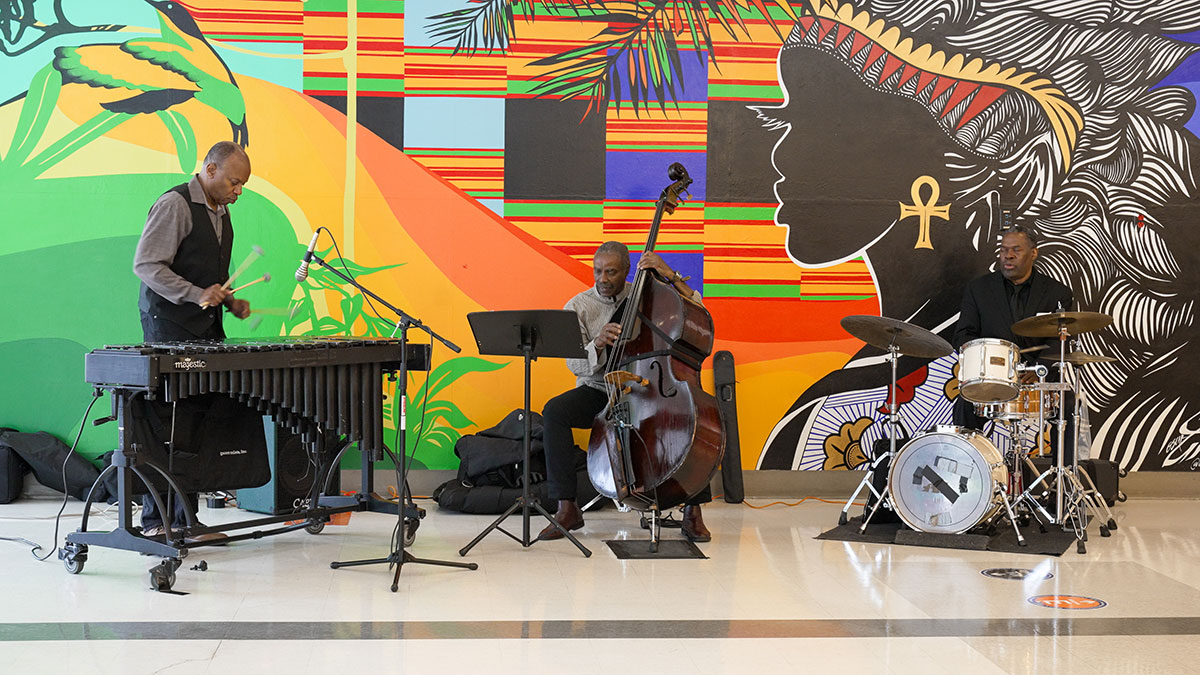
Music for the Soul provides musicians for live concerts, bedside engagement, and night shift performances, enhancing morale for staff and patients. Credit: NYC Health + Hospitals
H + H Artist-in-Residence Programs
LARISSA TRINDER
Research shows that embedding artists in healthcare settings provides an outlet for patients, families, and caregivers to decompress and find joy. The Artist-in-Residence program, a partnership with The Creative Center, is one of the most effective ways to integrate the arts into our hospital culture, helping reduce anxiety and fostering connection. It also highlights strategic system priorities like Correctional Health and Asylum Seekers, with artists raising awareness on crucial issues. Upcoming developments include training artists in trauma-informed practices and customizing programs for specific teams, as well as involving artists in our exhibition strategy.
LIZ RUBEL, The Creative Center’s Programs and Partners Coordinator
As a former Hospital Artist-In-Residence, I’ve seen firsthand how creative arts offer self-expression and moments of inspiration. We’re now partnering with NYC Health + Hospitals Arts in Medicine to restructure The Creative Center’s 25-year program to focus on healthcare staff. This will enhance their environments, encourage collaboration, and provide creative outlets to unwind and express individuality.

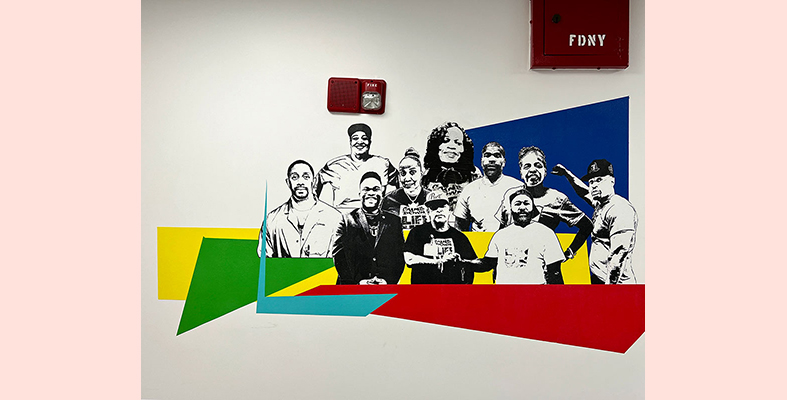
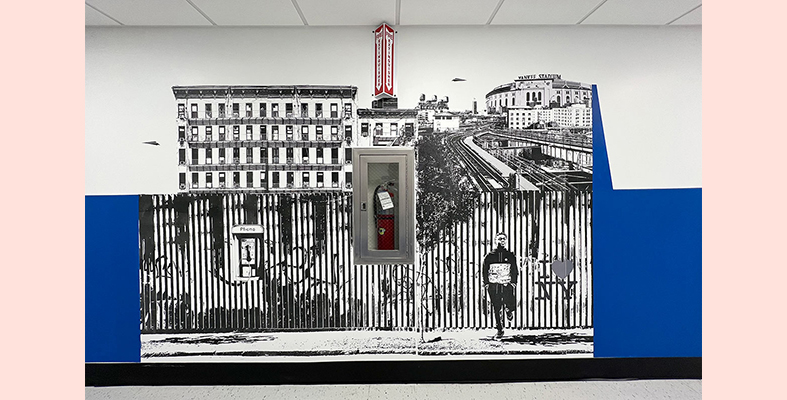
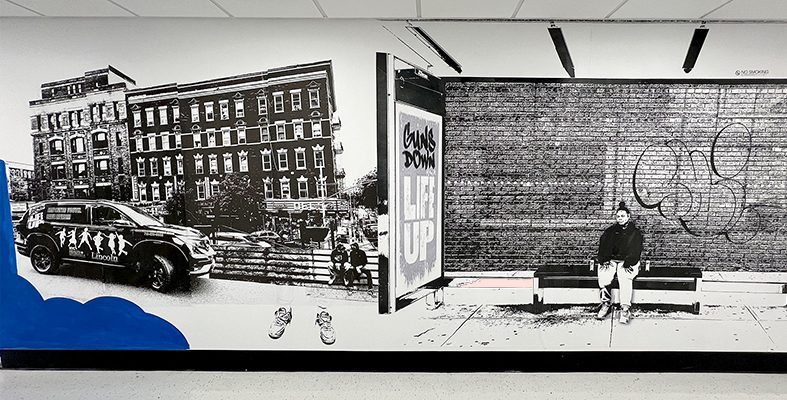

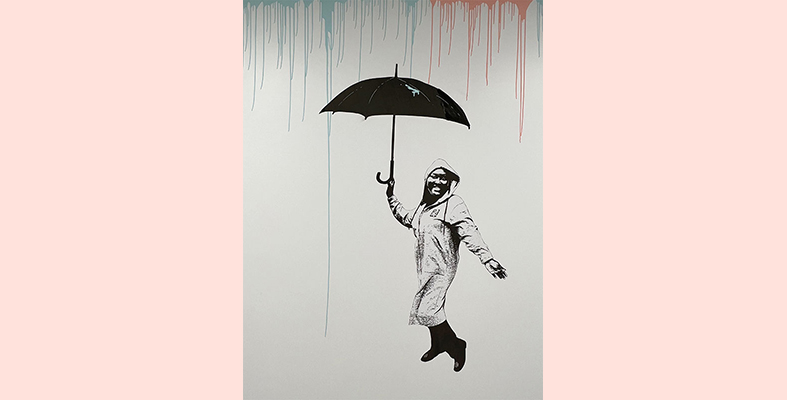
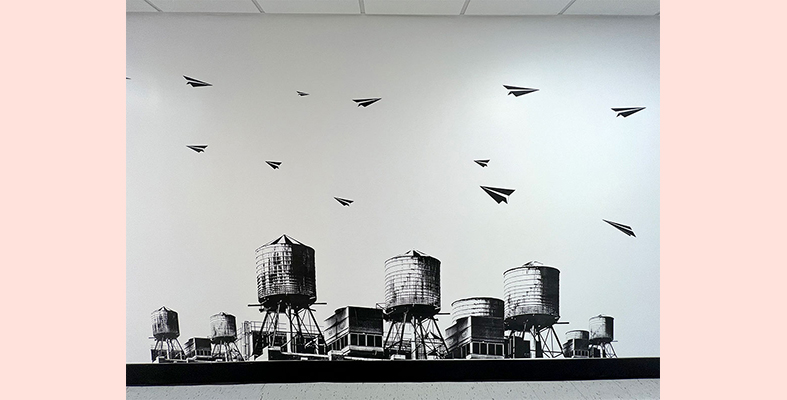

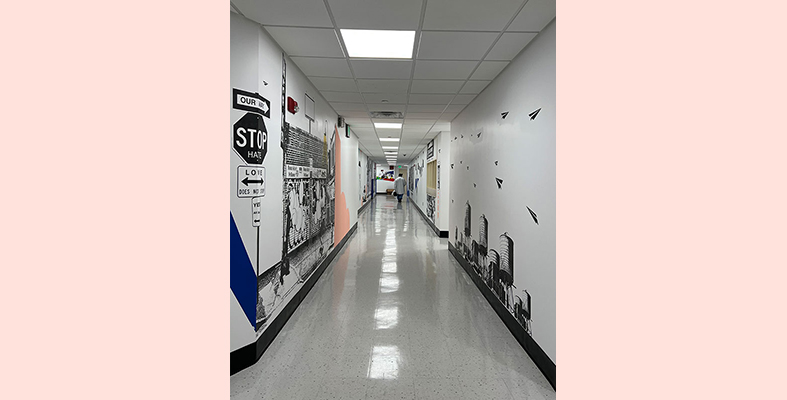
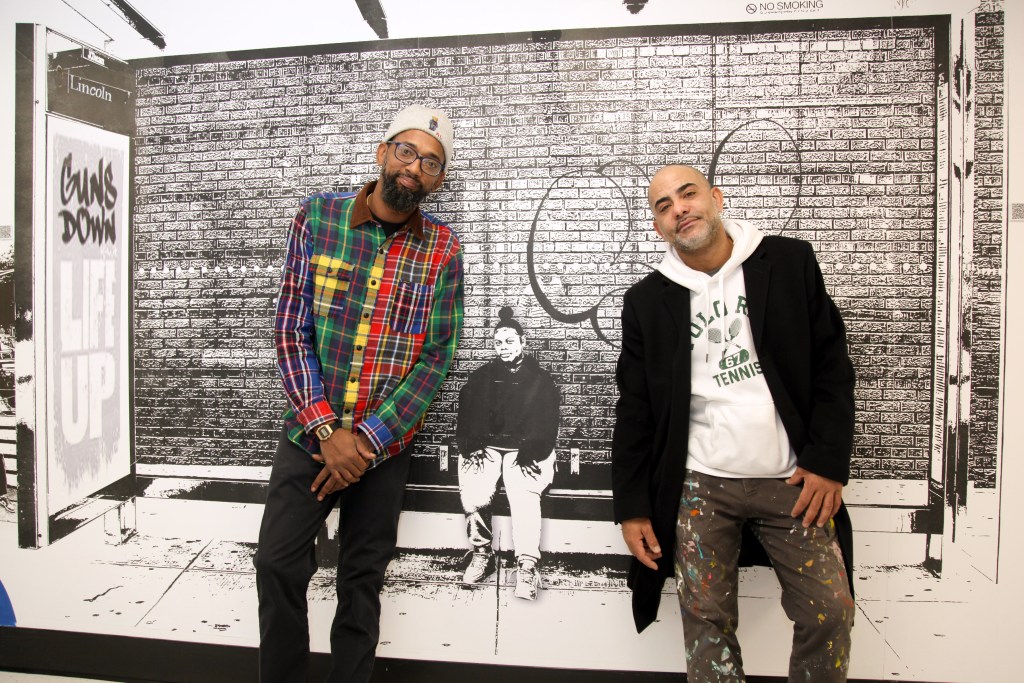
Young people combatting gun violence created positive scenes of the community.
Read More +
LARISSA TRINDER
In 2022, thanks to the city’s Department of Cultural Affairs (DCLA), we launched a new Artist in Residence program with a focus on civic issues, becoming part of the city’s Public Artists in Residences (PAIR) programs. Our artist, Modesto Flako Jimenez, was commissioned to amplify our hospital-based violence interruption programs, particularly addressing the public health crisis of gun violence.
Flako, a poet, playwright, and educator, spent a year embedded in our Guns Down Life Up program, working with youth affected by violence. His creative approach provided valuable support, offering new perspectives and enhancing the impact of our hospital-based violence intervention programs.
Flako’s residency was a powerful and positive experience for the youth involved in our gun violence programs.
Countless young people are victims of gun violence in our city each year. Countless others have access to guns, and tens of thousands are exposed via social media and news headlines of gun violence across our city, country, and world. Tragically, too many lack social support and mental health services to avoid gun violence. Art can be used to provide youth with self-awareness, self-expression, confidence, and other skills to avoid gun violence and educate their peers on how they may do the same.
Modesto Flako Jimenez,
Public Artist in Residence at
NYC Health + Hospitals
Flako’s work
During his residency, Flako developed several impactful projects:
- Interactive Mural at Lincoln Hospital: Created with graffiti artist Fernando “Ski” Romero, featuring uplifting scenes of the South Bronx and the Guns Down Life Up community, with QR codes linking to participant-created videos, poems, and artwork.
- Modern Adaptation of Romeo and Juliet: Youth participants adapted and performed Shakespeare’s play, incorporating street slang and modern themes, while learning theater-making skills.
- Gallery Exhibit: Showcasing photography, film, poetry, and other creations by Guns Down Life Up participants at Materials for the Arts in Queens.
- Showcase at Carnegie Hall: An interactive performance at Carnegie Hall’s Resnick Education Wing, featuring scenes from Romeo and Juliet, poetry readings, a brief documentary, and an art-making activity.
Access to the Collection
LARISSA TRINDER
Our art collection features significant works like the WPA murals from the 1930s, the Keith Haring mural at Woodhull, and the Romare Bearden collage at Bellevue, as well as about 7000 other artworks. We needed a strategy to make them more visible and accessible internally and externally, to help people understand them better, and to enhance health outcomes and pride in the facilities.
Initially, Linh’s team experimented with an audio guide for in-facility art viewing, but it could only be used within the facilities and lacked visual elements. We needed a better solution. Laurie and Rick connected me with Kate Levin at Bloomberg Philanthropies, leading to our inclusion in the Bloomberg Connects app. We were the first healthcare system to be included. This app allows anyone, anywhere in the world, to explore our collection, placing us alongside world-class museums. Bloomberg Connects also provided educational signage with QR codes, making the art more accessible and engaging for staff, visitors, and patients at our hospitals.
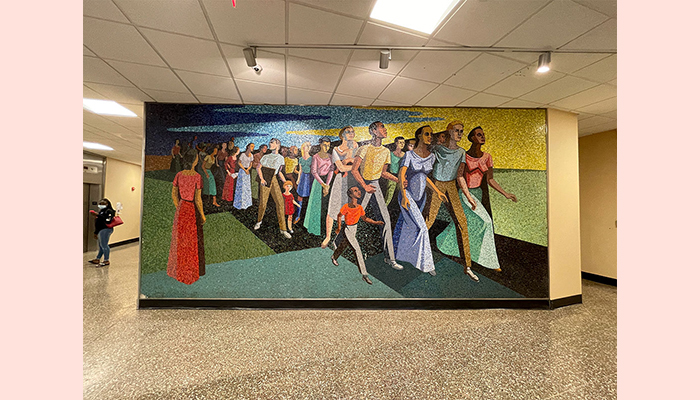
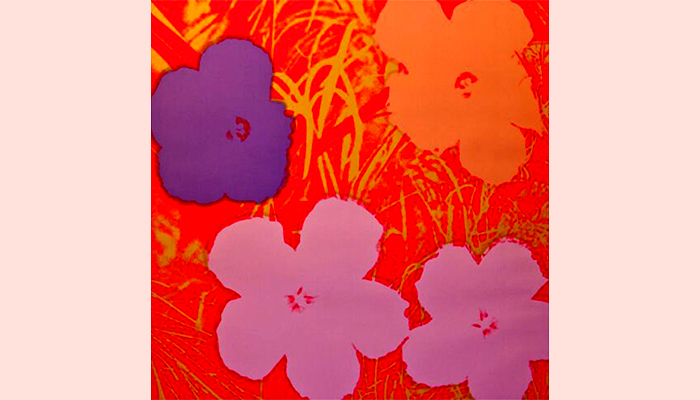
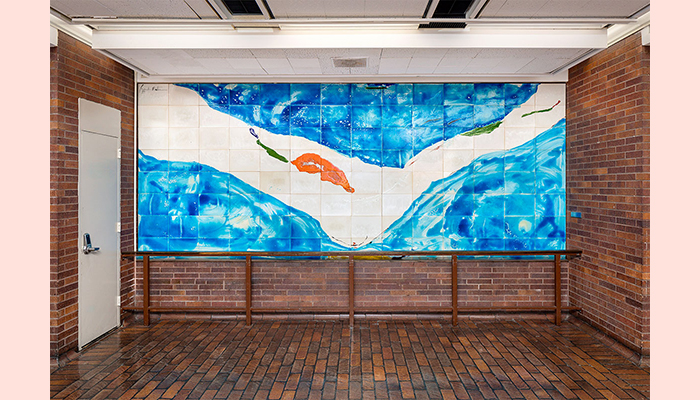
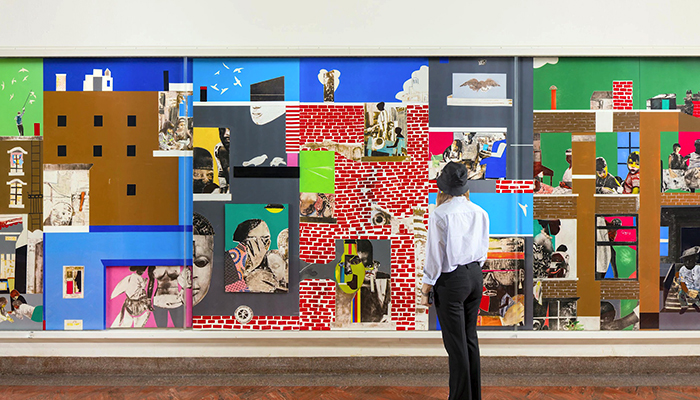

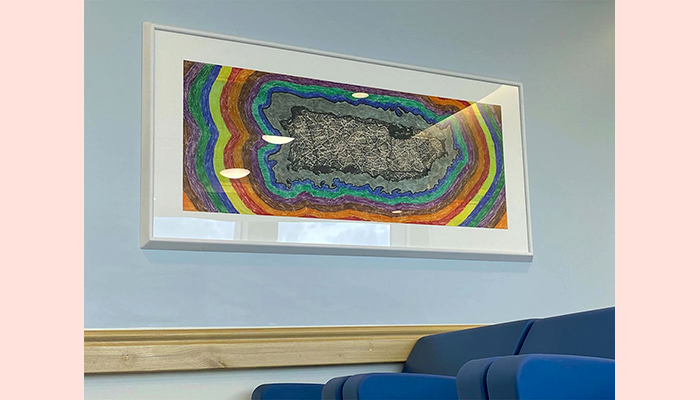


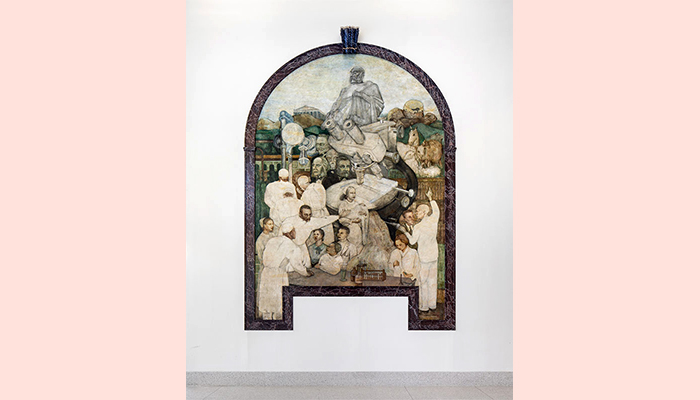
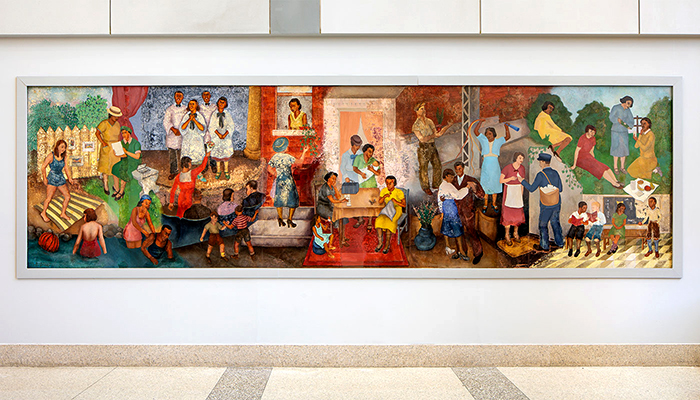
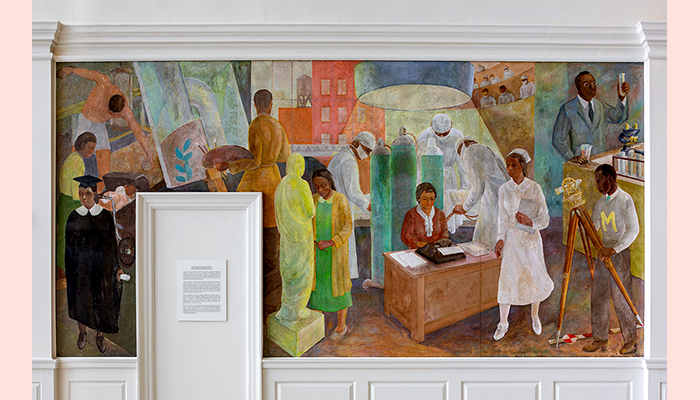
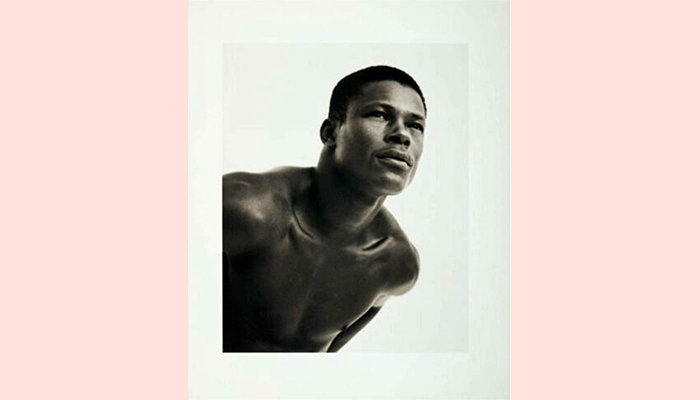
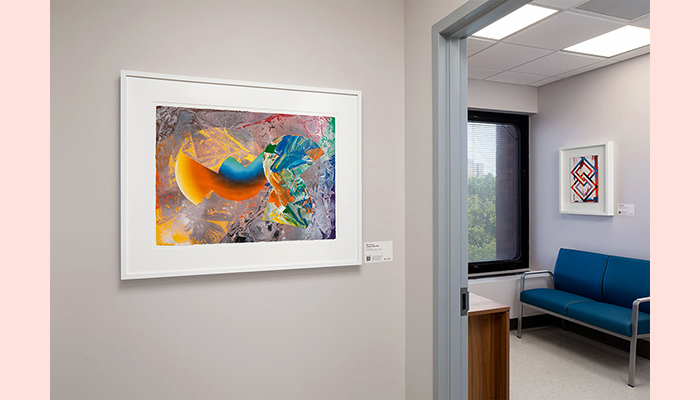
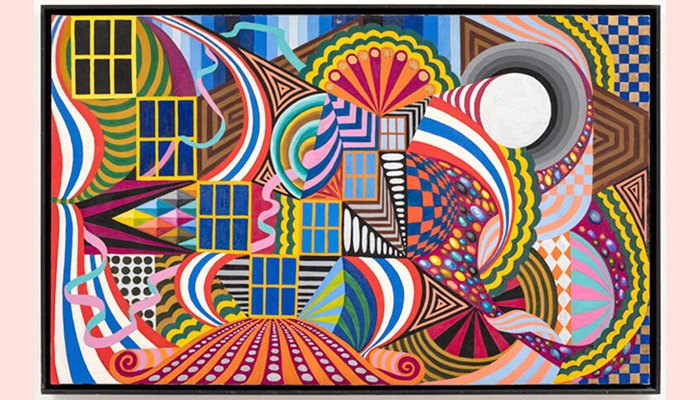
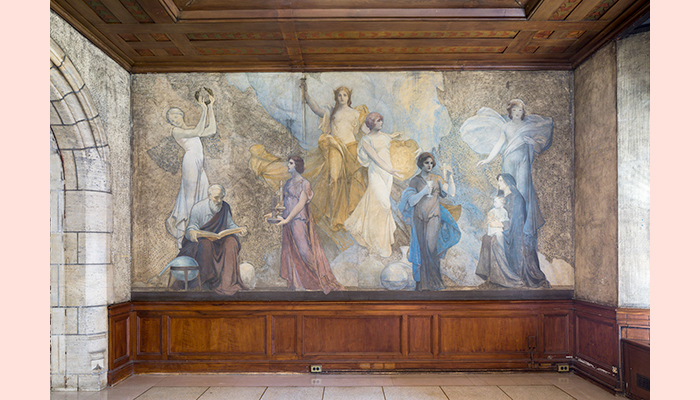

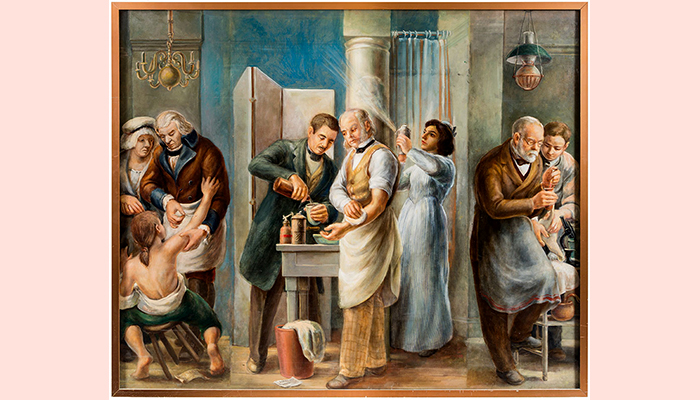
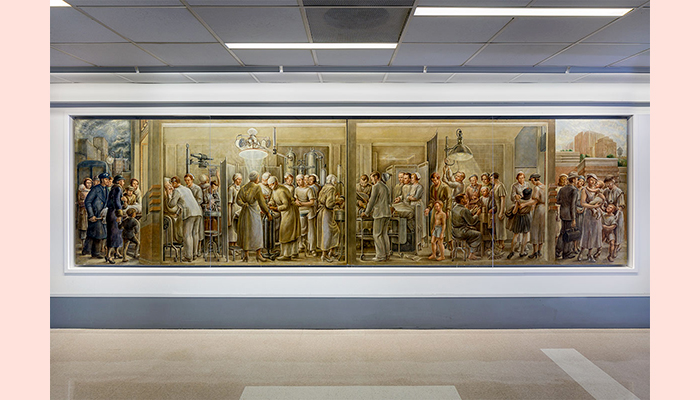
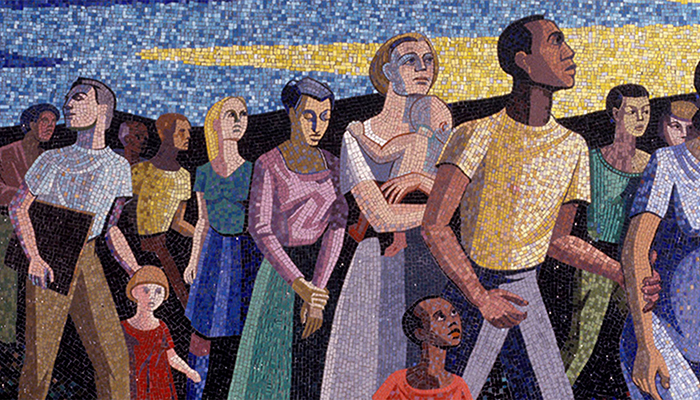
The art collection aims to create a calming atmosphere for patients and their families and supportive, healing places for staff. The selection of images highlights the diverse points of view represented in the collection, from site-specific commissions to new acquisitions. The diverse portfolio of works includes paintings, photographs, sculptures, installation art, and murals, by both emerging and established professional artists.
Correctional Health
Dr. MITCHELL KATZ
I think of all of the events that we’ve done, perhaps the most transforming was the exhibition of artwork that is done by people at Rikers who are detained there. NYC Health + Hospitals has a Correctional Health Services division that provides all of the health services at Rikers and other sites. It’s an important role not only because of physical health, but because many incarcerated individuals suffer from mental illness, and having them treated by our medical staff and therapists rather than correctional staff ensures confidentiality and trust.
Correctional Health Services has arts therapists at Rikers Island’s jail to provide mental health support through creative activities. It’s a good way for people to use their emotional powers to express themselves through art. Going forward, I really want to see this merging of a mission about the arts and a mission about health and all of the ways that we can bring those two things together.
LARISSA TRINDER
When Nicole Levy, MPH, CHES, the Director of Communications and Intergovernmental Affairs for Correctional Health Services, and Dr. Barbara Bethea, the Director of the Creative Arts Therapy program, reached out to me, we decided to develop an exhibition, Creating Within, at Woodhull Hospital. Creating Within displayed Correctional Health patients’ art side-by-side with artwork from our collection.
The Correctional Health patients that shared their powerful work in the exhibition, and the staff that worked closely with them to make this happen, reinforced the mission of NYC Health + Hospitals to support and empower everyone, regardless of circumstance.
I’ve been reflecting on how Arts in Medicine aligns with H+H’s priority of health justice. It’s not just about providing healthcare within the criminal justice system, though that’s part of it. Access to the arts as a healing tool is a health equity issue. We serve everyone, including people experiencing homelessness and victims of domestic violence, and everyone can benefit from the arts. Therefore, we must continue to innovate, expand access, and share the impact of our programs to gain more support for Arts in Medicine both within and beyond our system.
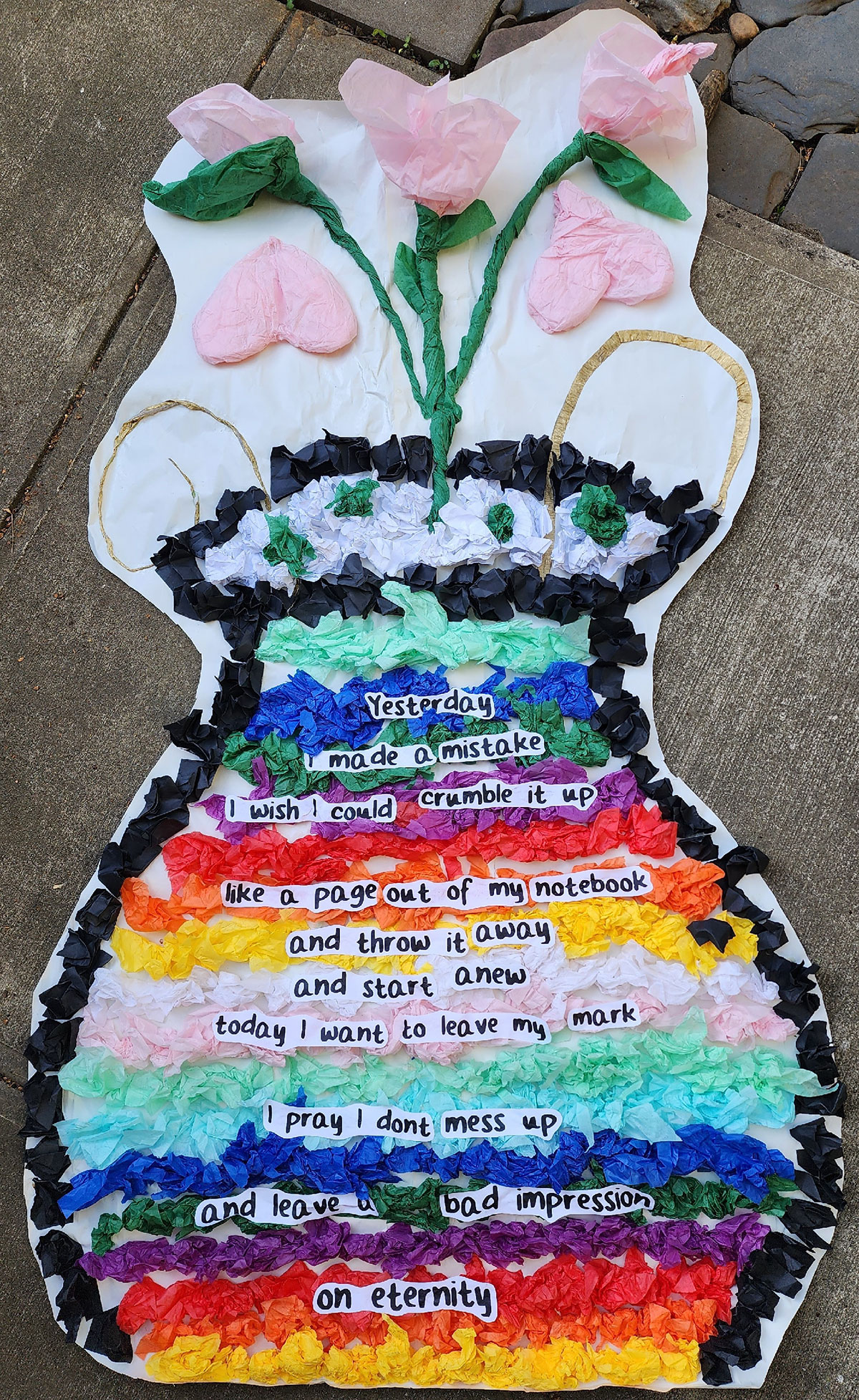
Flowers of Hope, by Keith G., with assistance from Jose C., Leonides L., Tyshe N., and Sakr S. Credit: NYC Health + Hospitals
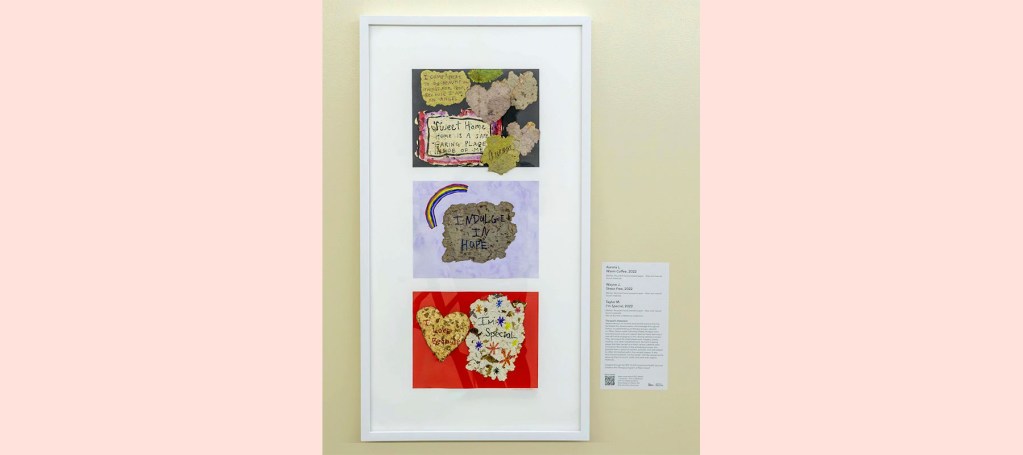


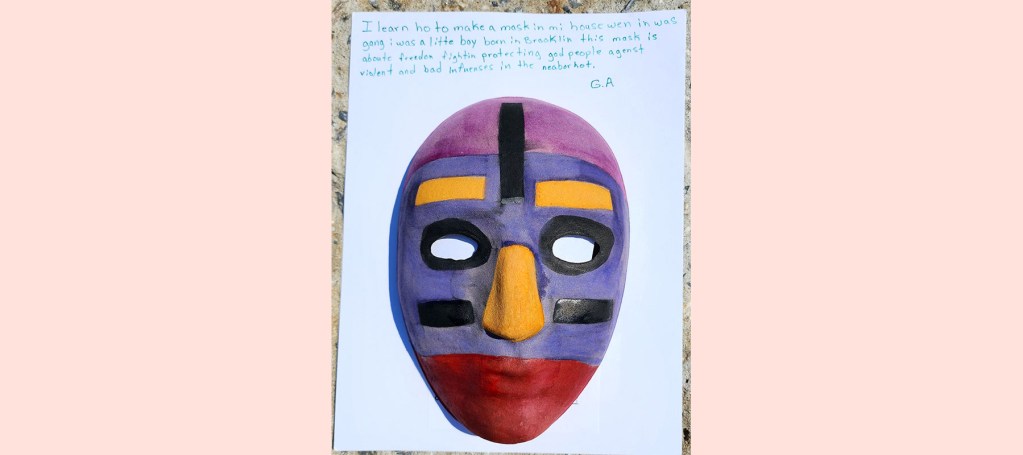
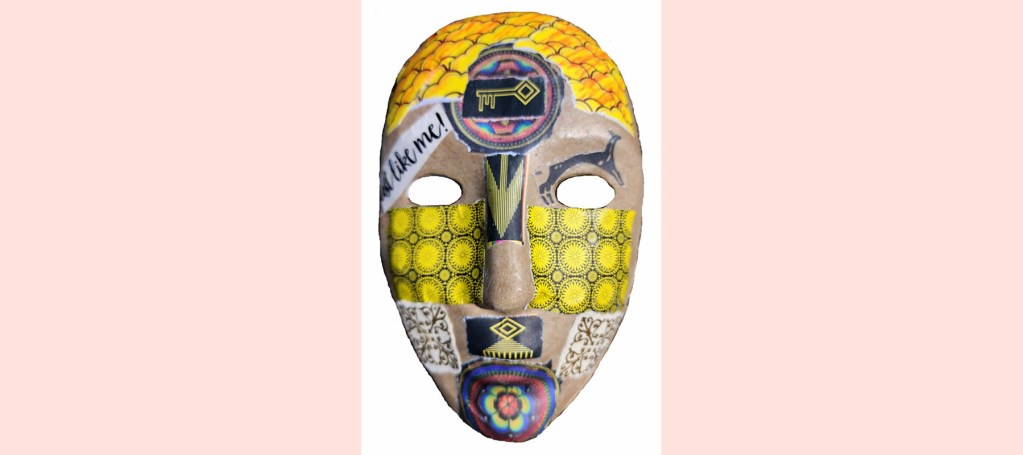

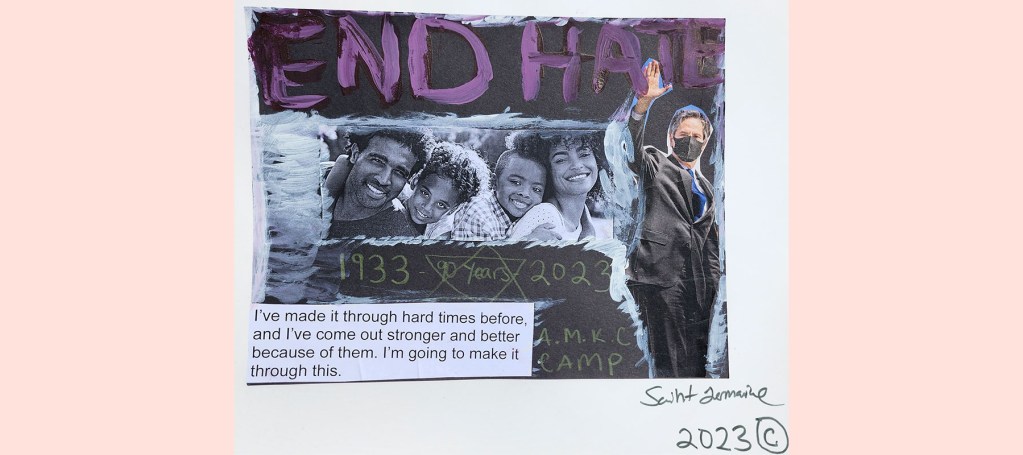
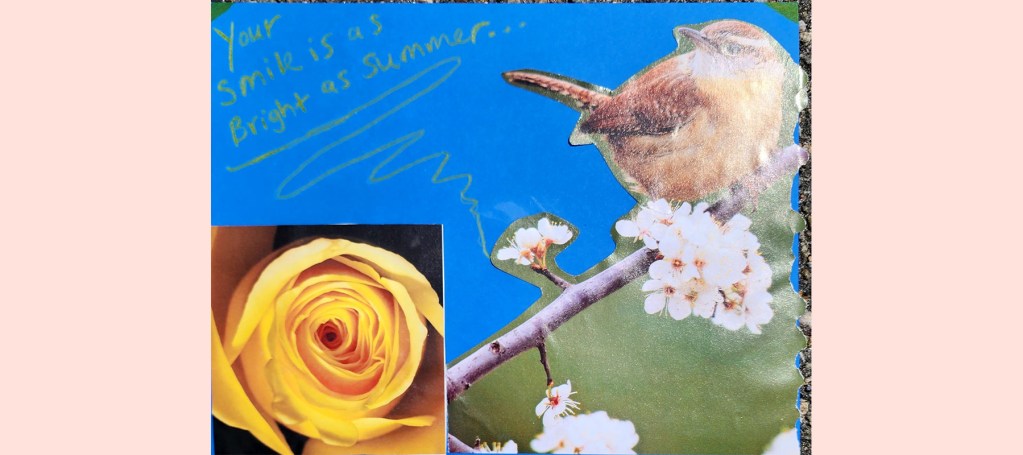

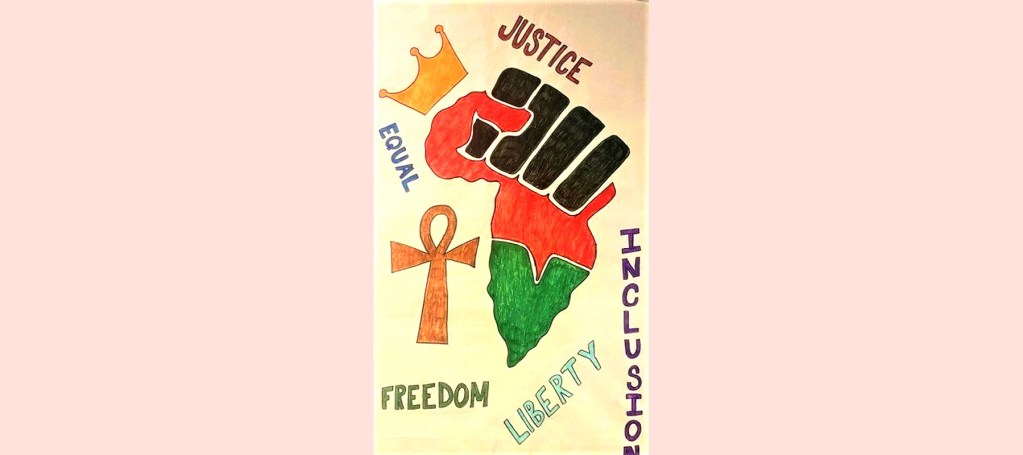
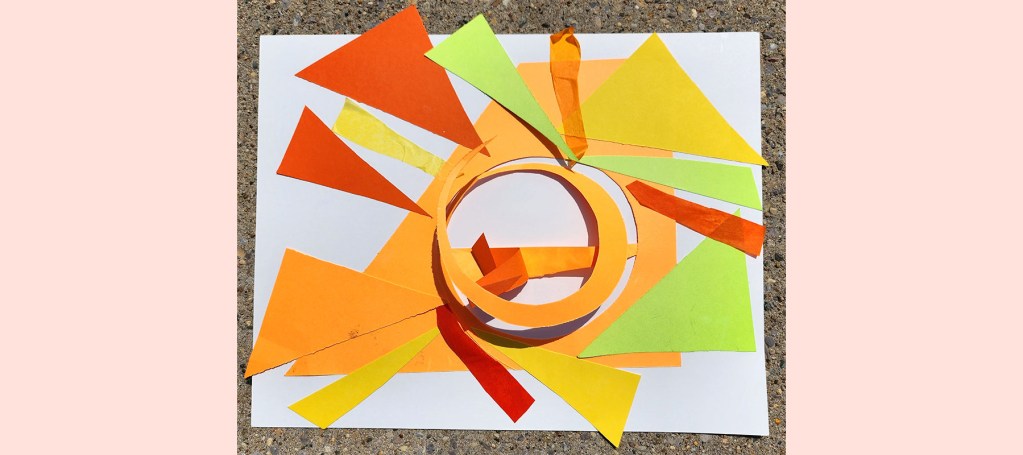
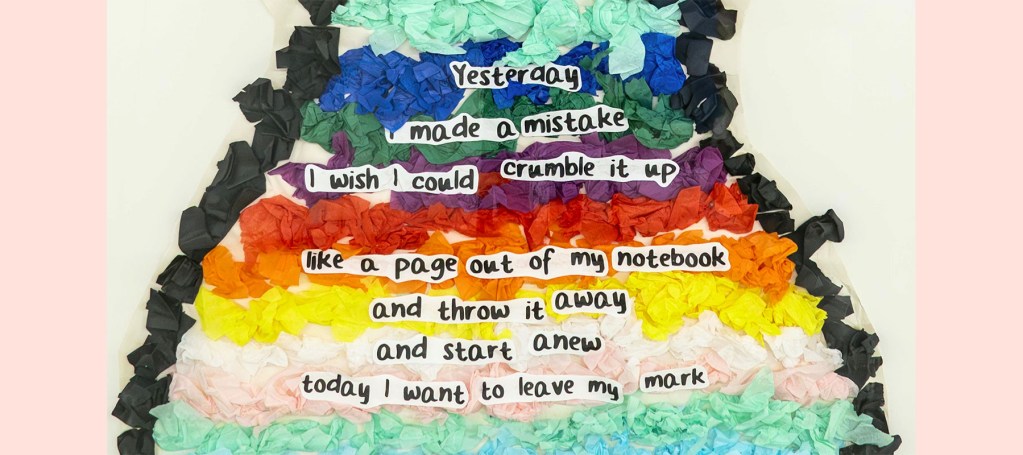
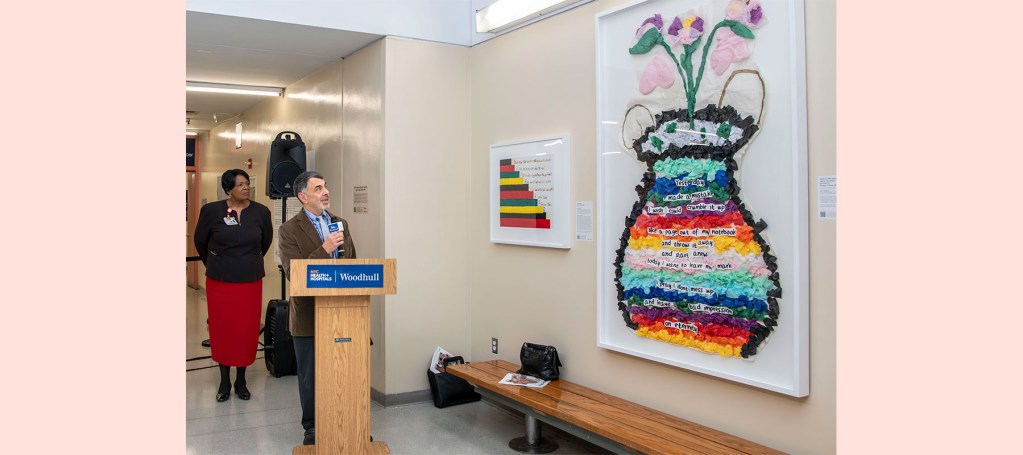
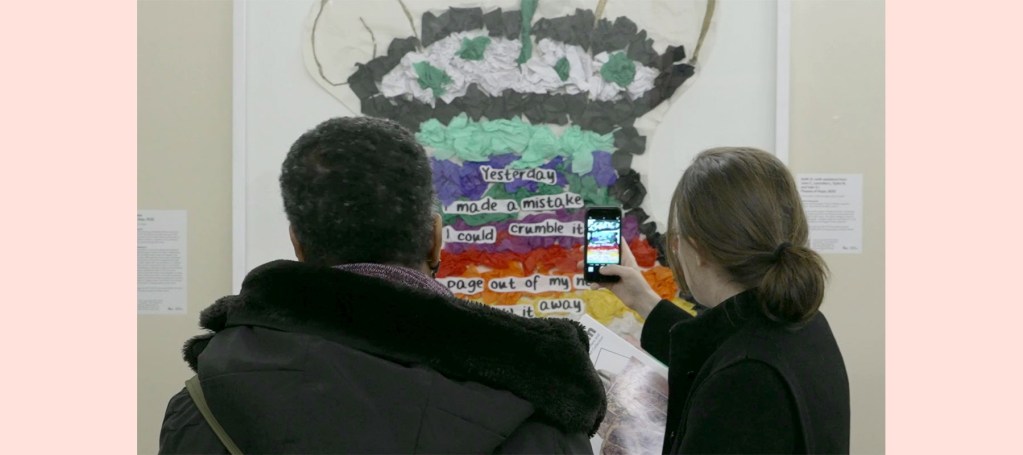
Image 1: Top: Aurora L., Middle: Stress Free, by Wayne J., Bottom: Taylor M. Image 2: Warrior Masks by Correctional Health Service patients at Rikers. Image 3: Left and Right: Audencio N., 2023. Middle: October Kimono, by William Gatewood, 1987. Image 4: Proyexion Paisaje Vertical, by Antonio Navia, 1972. Image 5: Creative Arts Therapy Warrior Masks, 2022 (by Carlos R., Erick F., Elvin N., Naranja). Image 6: Warrior’s Mask. Anonymous. Image 7: Mask, by Elvin N. Image 8: Left: Middle top: Gemini. Middle bottom: Andre A., Right top: Andre A., Right bottom: Almond L. Image 9: Untitled, by Saint Jermaine. Image 10: Summer Rain, by Saint Jermaine. Image 11: Mandala, by Nando P. and Melborne G. Image 12: Brian N. and George V. Image 13: The Sun, by Timothy T. Image 14: Flowers of Hope, by Keith G., with assistance from Jose C., Leonides L., Tyshe N., and Sakr S. Image 15: Flowers of Hope, by Keith G., with assistance from Jose C., Leonides L., Tyshe N., and Sakr S. Image 16: Flowers of Hope, by Keith G., with assistance from Jose C., Leonides L., Tyshe N., and Sakr S. Image 17: Flowers of Hope, by Keith G., with assistance from Jose C., Leonides L., Tyshe N., and Sakr S.
Lullaby Project
LARISSA TRINDER
Our collaboration with Carnegie Hall is one of our longest running partnerships and predates Arts in Medicine. It was started at H+H’s Jacobi Medical Center. But programs were somewhat sporadic. With the Illumination Fund’s support, we have been able to create a more robust program that includes staff wellness concerts at Carnegie Hall and the Lullaby Project for patients and families, and we’re also piloting some violence interruption programs together.
SARAH JOHNSON, Chief Education Officer and Director of Carnegie Hall’s Weill Music Institute
We’ve been collaborating with NYC Health & Hospitals since 2009, initially through concerts. This evolved into the Lullaby Project, where new and expecting parents work with professional musicians to create personal lullabies for their babies. The program has now expanded to 12 sites across NYC, including healthcare, social service, and justice settings.
The Lullaby Project has grown beyond just pregnant women — partners, families, and even nurses have participated, creating lullabies as a form of connection and love. The project focuses on addressing inequity, serving communities in need, such as those experiencing poverty, homelessness, or resettling as refugees. It also allows families to reconnect with their cultural heritage and traditions.
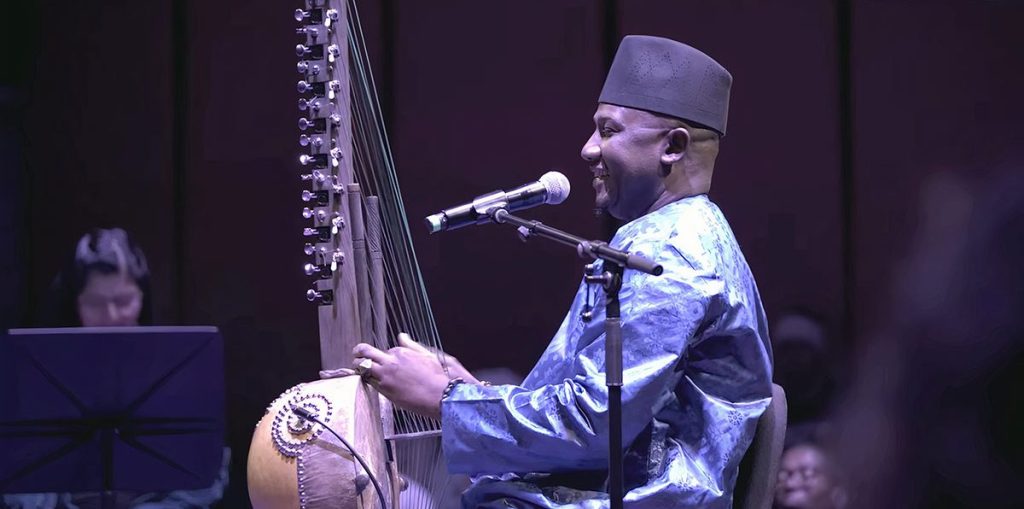

Image 1: NYC Health + Hospitals and Carnegie Hall expanded their partnership by launching Well-being Concerts for healthcare workers. Credit: Carnegie Hall, kora player Seckou Keita. Image 2: Singing during and after pregnancy can support maternal health and aid in child development and singing is one of few treatment options shown to reduce maternal stress during pregnancy.
The Power of Partnerships
LARISSA TRINDER
Partnerships are integral to accomplishing our objectives. Laurie, Rick, and Kira have been invaluable resources for us. They help us with everything from thought leadership to program development to opening doors to other funders and partners. In addition, over the years, Rick has uncovered remarkable information about our collection that has helped our understanding and interpretation of many works of art.
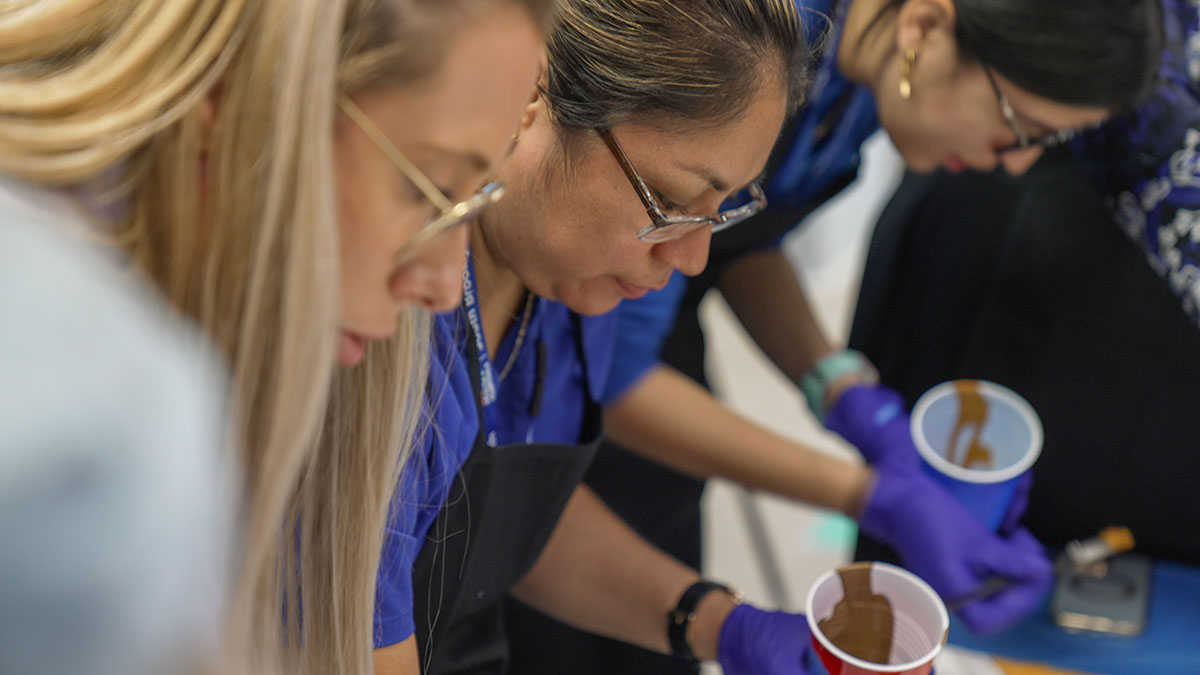
Hospital colleagues collaborate with the artist and work side-by-side. Credit: NYC Health + Hospitals
Read More +
LAURIE TISCH
I serve on the boards of a number of cultural organizations across the city, and it has been a pleasure to introduce Larissa and her team to people at the Whitney Museum, at the Brooklyn Museum, at Juilliard and others. There is so much they can do together to offer access to the arts and to healthcare. The programs that have resulted from those introductions are ones that really demonstrate the impact of our Arts in Health initiative.
RICK LUFTGLASS
NYC Health + Hospitals addresses broad health issues that align with our focus. They also collaborate with other grantees who bring additional arts expertise to the patients and staff. By sharing insights from these partnerships, H+H enhances both their work and that of our other grantees. Their efforts to connect with New York arts organizations have led to more effective programs and a broader range of artistic disciplines, allowing Health + Hospitals to diversify its offerings.
Research and Evaluation
LARISSA TRINDER
In recent years, there has been a remarkable growth in the field of arts in health, with NYC Health + Hospitals Arts in Medicine at the forefront of what is now an international movement, with major institutions investing in its development and research. Support from senior leadership at H+H and the Illumination Fund has been critical to our success.
We’re proud of our research and evaluation efforts, including our participation in the global Hospital Mural Evaluation (HoME) study, a collaborative effort, involving the Jameel Arts and Health Lab at NYU, the World Health Organization, and CultureRunners which will assess the impact of large-scale murals on public health in hospitals in four countries. The insights will help us refine and improve our programs.
The growing interest in arts in healthcare is driving a paradigm shift, with our department frequently consulted by others inside and outside our system. The positive outcomes we’re seeing underscore the transformative power of integrating arts into healthcare.
Read More +
Arts in Medicine Supports Staff Wellness
- After Wellness Program Directors were hired, H+H has seen a range of wellness service utilization increase up to 52%-86%, including Arts in Medicine and creative arts wellness events, with positive reviews.
- Aggregate data collection, using post-survey methodology, has shown that Wellness Rooms and arts-based wellness activities in them decrease stress upwards of 69%, increases positive mood by 36%, as well as increase cognitive alertness by 38%.
- There was a 6% decrease of staff reporting symptoms of burnout that wouldn’t go away and a 10% decrease in staff reporting that they were beginning to burn out or had one or more symptoms due to a variety of workforce wellness interventions including arts activities.
Conclusion
Dr. ERIC WEI
The impact up to this point has been beyond anybody’s wildest imagination and expectations. But I think there’s still so much more that we can do. I don’t think all 43,000 staff across NYC Health + Hospitals have formally been part of any of the programming. What we want is to fully penetrate the system, to reach all the staff.
And it’s not just like a one-time thing. This is just part of how we take care of our own. It’s part of how we create a healing environment for our patients, for the visitors to our facilities, and for our system, so we need to develop more and more programming that has the highest impact. We want to be able to study the impact and increase those that have the biggest impact.
And to put our Arts in Medicine programs in context, I think we’re unique. Many hospitals have arts programs, but I have not met anyone else doing what we are doing. And I go to many conferences and speak to people who work in safety net systems, private systems, nonprofit systems. I think we’re really pioneering things here. And that’s what drew me to coming across the country from California to New York City and H+H. In an era where many cities are losing their safety net systems, people in the most vulnerable patient populations and communities are suffering. So it means a lot to us to be able to make a difference in this city for these communities, these patients. And what we do sets policy across the country — Washington, DC, the White House, Congress, the state, everyone’s paying attention and saying, well, if they could do it, why can’t we do it? We are on the cutting edge, and we hope to see programs grow all across the country.
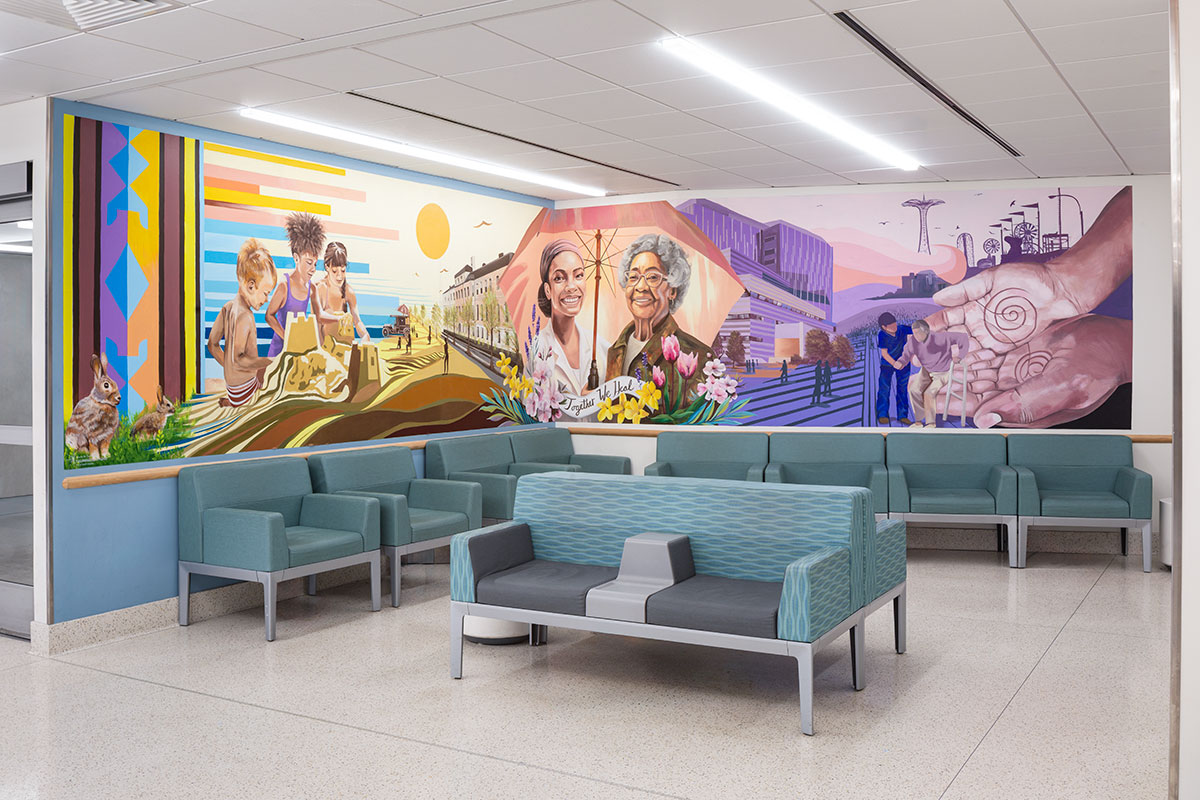
Section of Together We Heal (2023) by artist Kristy McCarthy, in the waiting room of the adult emergency department at NYC Health + Hospitals/South Brooklyn Health. Credit: NYC Health + Hospitals
Endnotes
Developing the Arts in Health initiative
1. Eddie Torres, “The Role of Arts and Culture in Health,” Grantmakers in the Arts, Accessed May 23, 2019, https://www.giarts.org/blog/eddie/role-arts-and-culture-health
2. Cara James, “NeuroArts Blueprint,” Aspen Institute, Accessed 2021, https://neuroartsblueprint.org/wp-content/uploads/2021/11/NeuroArtsBlue_ExSumReport_FinalOnline_spreads_v32.pdf
3. “Household Pulse Survey, 2020–2024. Anxiety and Depression,” National Center for Health Statistics, accessed on September 16, 2024, https://www.cdc.gov/nchs/covid19/pulse/mental-health.htm
4. “Fauci: Coronavirus Is Shining a Bright Light on Health Disparities,” C-SPAN, Accessed April 7, 2020, https://www.c-span.org/video/?c4867412/user-clip-fauci-coronavirus-is-shining-bright-light-health-disparities
5. “COVID Data Tracker,” Centers for Disease Control and Prevention, accessed September 17, 2024, https://covid.cdc.gov/covid-data-tracker/#datatracker-home
6. Anthony Fauci, “It Ain’t Over Till It’s Over…but It’s Never Over.” New England Journal of Medicine (November 26 2022), https://www.nejm.org/doi/full/10.1056/NEJMp2213814
7. Corrine Thompson, Jennifer Baumgartner, Carolina Pichardo, et al. “COVID-19 Outbreak — New York City, February 29–June 1, 2020.” Morbidity and Mortality Weekly Report 69 (2020): 1725–1729. http://dx.doi.org/10.15585/mmwr.mm6946a2
8. Lunna Lopes, Ashley Kirzinger, Grace Sparks, Mellisha Stokes, and Mollyann Brodie, “KFF/CNN Mental Health in America Survey: Findings,” Kaiser Family Foundation, effective October 05, 2022, https://www.kff.org/report-section/kff-cnn-mental-health-in-america-survey-findings/
9. Vivek Murthy, MD. Onstage conversation with Oprah Winfrey. UCLA, May 4. 2023 (retrieved September 29, 2024) https://www.uclahealth.org/news/article/oprah-winfrey-us-surgeon-general-vivek-murthy-headline-wow
10. “Behavioral Health Needs Are Largely Unmet Across the U.S.,” Pew Charitable Trusts, effective May 22, 2024, https://www.pewtrusts.org/en/research-and-analysis/data-visualizations/2024/behavioral-health-needs-are-largely-unmet-across-the-us
11. Meghan Hamwey, Christina Norman, Rachel Suss, et al, “State of Mental Health of New Yorkers,” New York City Department of Health and Mental Hygiene, effective May, 2024, https://www.nyc.gov/assets/doh/downloads/pdf/mh/state-of-mental-health-new-yorkers.pdf
12. Lunna Lopes, Ashley Kirzinger, Grace Sparks, Mellisha Stokes, and Mollyann Brodie, “KFF/CNN Mental Health in America Survey: Findings,” Kaiser Family Foundation, effective October 05, 2022, https://www.kff.org/report-section/kff-cnn-mental-health-in-america-survey-findings/
13. D. Fancourt and S. Finn, “What is the evidence on the role of the arts in improving health and well-being? A scoping review.” WHO Regional Office for Europe: Health Evidence Network Synthesis Report, no.67 (2019), https://www.who.int/europe/publications/i/item/9789289054553
14. Daisy Fancourt and Saoirse Finn, What is the evidence on the role of the arts in improving health and well-being? A scoping review (Copenhagen: WHO Regional Office for Europe, 2019), Health Evidence Network synthesis report, No. 67. 2. RESULTS, https://www.ncbi.nlm.nih.gov/books/NBK553778/
15. NeuroArts Blueprint: Advancing the Science of Arts, Health, and Wellbeing, The Aspen Institute, (November 2021), https://www.aspeninstitute.org/wp-content/uploads/2021/11/NeuroArtsBlue_Vol2_ExSumReport_v24spreads.pdf
16. NeuroArts Blueprint: Advancing the Science of Arts, Health, and Wellbeing, The Aspen Institute, (November 2021), https://www.aspeninstitute.org/wp-content/uploads/2021/11/NeuroArtsBlue_Vol2_ExSumReport_v24spreads.pdf
Rockefeller Philanthropy Advisors Insights
17. Olga Tarasov, Melissa A. Berman, and Renee Karibi-White, “Operating Archetypes: Philanthropy’s New Analytical Tool for Strategic Clarity,” 2022, https://www.rockpa.org/wp-content/uploads/2022/04/Operating-Archetypes-Philanthropys-New-Analytical-Tool-for-Strategic-Clarity-2.pdf
What Does Impact Look Like?
18. Yasemin Özümerzifon, Allison Ross, Tessa Brinza, Gina Gibney, and Carol Ewing Garber, “Exploring a Dance/Movement Program on Mental Health and Well-Being in Survivors of Intimate Partner Violence During a Pandemic.” Frontiers in Psychiatry, (May 26, 2022), https://pubmed.ncbi.nlm.nih.gov/35722545
19. Judith Bek, Aline I. Arakaki, Fleur Derbyshire-Fox, Gayathri Ganapathy, Mathew Sullivan, and Ellen Poliakoff, “More than Movement: Exploring Motor Simulation, Creativity and Function in Co-developed Dance for Parkinson’s.” Frontiers in Psychology (February 28, 2022), https://www.frontiersin.org/journals/psychology/articles/10.3389/fpsyg.2022.731264/full
20. Li-Li Wang, Cai-Jie Sun, Yan Wang, Ting-Ting Zhan, Juan Yuan, Cong-Ying Niu, Jie Yang, Shan Huang, Ling Cheng, “Effects of dance therapy on non-motor symptoms in patients with Parkinson’s disease: a systematic review and meta-analysis,” Aging Clin Exp Res, no.34 (November 2021): 1201-1208), https://link.springer.com/article/10.1007/s40520-021-02030-7
21. Elizabeth Norton, Ann Hemingway, and Caroline Ellis Hill, “The Meaning and Impact on Well-Being of Bespoke Dancing Sessions for Those Living with Parkinson’s,” International Journal of Qualitative Studies on Health and Well-being, no. 1 (December 2023): https://pubmed.ncbi.nlm.nih.gov/37559339/
Chapter 2: Mental Health
22. “NYC Vital Signs,” New York City Department of Health and Mental Hygiene (June 2015), https://home.nyc.gov/assets/doh/downloads/pdf/survey/survey-2015serious-mental-illness.pdf
23. “Prison Policy Initiative, “Mass Incarceration: The Whole Pie 2019,” Last modified March 19, 2019, https://www.prisonpolicy.org/reports/youth2019.html
24. “Kids,” National Alliance on Mental Illness (NAMI), accessed August 1, 2024, https://www.nami.org/your-journey/kids-teens-and-young-adults/kids/#:~:text=Mental%20health%20conditions%20are%20very,before%20the%20age%20of%2024
25. Vanessa Pinfold, Graham Thornicroft, Peter Huxley, Paul Farmer, “Active ingredients in anti-stigma programmes in mental health,” International Review of Psychiatry, (Summer 2009): 123-131, https://pubmed.ncbi.nlm.nih.gov/16194782/
26. “Mental Health,” U.S. Department of Veterans Affairs, accessed August 15, 2024, https://www.mentalhealth.va.gov/
27. Britt Stigler, “How Gibney Dance Studios Expanded More Than Just Their Footprint,” October 3, 2019, https://www.allarts.org/2019/10/gibney-dance-studios-expanded-more-than-just-their-footprint/
28. All Arts TV, “How Gibney Dance Studios Expanded More Than Just Their Footprint,” October 3, 2019, video, https://www.youtube.com/watch?v=10m6cD3ipgg&t=79s
29. “Intimate Partner Violence Prevention Resource for Action: A Compilation of the Best Available Evidence,” Centers for Disease Control and Prevention, 2017, accessed August 1, 2024, https://www.cdc.gov/violenceprevention/pdf/ipv-prevention-resource_508.pdf
30. Julie Wertheimer-Meier & Edward Hill, “Rates of Intimate Partner Violence Across New York City: An Intersectional Analysis,” NYC Mayor’s Office to End Domestic and Gender-Based Violence, September 2022, https://www.nyc.gov/assets/ocdv/downloads/pdf/Community-District-FA-IPV-Final-Report.pdf
31. “Domestic Violence: Recent Trends in New York,” Office of Budget and Policy Analysis of the New York State Comptroller, October 2023, accessed August 1, 2024, https://www.osc.ny.gov/files/reports/pdf/domestic-violence-recent-trends-10-23.pdf
32. Katherine M. Iverson, Ph.D., “Addressing the Stress and Trauma of Experiencing Intimate Partner Violence,” US Department of Veterans’ Affairs National Center for PTSD, accessed August 1, 2024, https://www.ptsd.va.gov/professional/treat/type/intimate_partner_violence.asp
33. “Impact Report: COVID-19 and Domestic Violence Trends,” Council on Criminal Justice National Commission on COVID-19 and Criminal Justice, accessed August 1, 2024, https://counciloncj.org/impact-report-covid-19-and-domestic-violence-trends/
34. Yasemin Özümerzifon, Allison Ross, Tessa Brinza, Gina Gibney, Carol Ewing Garber, “Exploring a Dance/Movement Program on Mental Health and Well-Being in Survivors of Intimate Partner Violence During a Pandemic,” Frontiers in Psychiatry, May 26, 2022, https://pubmed.ncbi.nlm.nih.gov/35722545/
35. “Reporting Center Data,” Stop AAPI Hate, accessed August 16, 2024, https://stopaapihate.org/explore-our-data
36. “National Latino and Asian American Study,” Mass General Research Institute, accessed August 16, 2024, https://www.massgeneral.org/mongan-institute/centers/dru/research/past/nlaas
37. “Stop AAPI Hate Mental Health Report,” Stop AAPI Hate, May 27, 2021, https://stopaapihate.org/2021/05/27/press-statement-mental-health-report/
38. “New Report: Elderly Asian Americans Report Significant Fear of Physical Assault, Stress and Anxiety,” Stop AAPI Hate, last modified May 24, 2022, https://stopaapihate.org/2022/05/24/release-elder-report-2022/
39. “Mental and Behavioral Health – Asian Americans,” U.S. Department of Health and Human Services Office of Minority Health, accessed August 30, 2024, https://minorityhealth.hhs.gov/mental-and-behavioral-health-asian-americans
40. Boreth Ly, Traces of Trauma: Cambodian Visual Culture and National Identity in the Aftermath of Genocide (University of Hawaii Press).
41. “From Innovation to Integration,” City of New York, accessed August 15, 2024, https://mentalhealth.cityofnewyork.us/integration
42. Patrick Corrigan, PsyD, “Fighting the stigma of mental illness, with Patrick Corrigan, PsyD,” interviewed by Kim Mills, Speaking of Psychology, American Psychological Association, February 2022, https://www.apa.org/news/podcasts/speaking-of-psychology/mental-illness-stigma
43. “Survey: Americans Becoming More Open About Mental Health,” American Psychological Association, last modified May, 2019, https://www.apa.org/news/press/releases/2019/05/mental-health-survey
44. “Forum Theater,” Involve UK, accessed July 31, 2024, https://www.involve.org.uk/resource/forum-theatre
45. Aaron Samuel Breslow, PhD, Sherry Simkovic, BA, Peter J. Franz, PhD, Elizabeth Cavic, EdM, MA, Qi Liu, PhD, Natalie Ramsey, MD, PhD, Jonathan E. Alpert, MD, PhD, Benjamin Le Cook, PhD, and Vilma Gabbay, MD, “Racial and Ethnic Disparities in COVID-19-Related Stressor Exposure and Adverse Mental Health Outcomes Among Health Care Workers”, The American Journal of Psychiatry, no. 12 (November 9, 2023), https://ajp.psychiatryonline.org/doi/abs/10.1176/appi.ajp.20220180
46. “Latinx/Hispanic Communities and Mental Health.” Mental Health America, accessed August 1, 2024, https://www.mhanational.org/issues/latinxhispanic-communities-and-mental-health
47. Ibid.
48. “Health of Indigenous Peoples of the Americas Living in New York City,” NYC Health, December 2021, https://www.nyc.gov/assets/doh/downloads/pdf/episrv/indigenous-peoples-health-2021.pdf
49. “Indigenous,” National Alliance on Mental Illness, accessed August 16, 2024, https://www.nami.org/your-journey/identity-and-cultural-dimensions/indigenous/
50. German Lopez and Ashley Wu, “Covid’s Toll on Native Americans,” New York Times, September 8, 2022, https://www.nytimes.com/2022/09/08/briefing/covid-death-toll-native-americans.html
51. Rhitu Chaterjee, “Hit Hard by COVID, Native Americans come together to protect families and elders,” NPR, November 24, 2021, https://www.npr.org/sections/health-shots/2021/11/24/1058675230/hit-hard-by-covid-native-americans-come-together-to-protect-families-and-elders
52. “Global Refuge calls for additional protections and support for unaccompanied migrant children,” Global Refuge, October 27, 2023, https://www.globalrefuge.org/news/lirs-calls-for-additional-protections-and-support-for-unaccompanied-migrant-children/
53. Camilo Montoya-Galvez, “Immigration Unaccompanied Migrant Children Record Numbers in U.S. Shelter System,” CBS News, October 14, 2022, https://www.cbsnews.com/news/immigration-unaccompanied-migrant-children-record-numbers-us-shelter-system/
55. Charlaine Lasse, MSN, RN, RNC-NIC, “A Chorus of Nursing Voices and the Timeless Truths of Ancient Tragedy,” Off the Charts, (April 11, 2024), https://ajnoffthecharts.com/a-chorus-of-nursing-voices-and-the-timeless-truths-of-ancient-tragedy/
56. Kimberlyn Leary, Ph.D. Mental Health and Girls of Color. The Center on Gender Justice & Opportunity at Georgetown Law, 2020. Accessed August 16, 2024, https://genderjusticeandopportunity.georgetown.edu/wp-content/uploads/2020/06/Mental-Health-and-Girls-of-Color.pdf
57. “Young Women of Color and Mental Health,” The Center for Law and Social Policy, last modified 2018, https://www.clasp.org/wp-content/uploads/2022/01/2018_mentalhealth.pdf
Chapter 3: Aging-Related Diseases
58. “What Is Dementia?” Alzheimer’s Association, accessed August 17, 2024, https://www.alz.org/alzheimers-dementia/what-is-dementia
59. “Alzheimer’s Facts and Figures,” Alzheimer’s Association, accessed August 17, 2024, https://www.alz.org/media/Documents/alzheimers-facts-and-figures.pdf
60. Jack C Lennon, Stephen L Aita, Victor A Del Bene, Tasha Rhoads, Zachary J Resch, Janelle M Eloi, Keenan A Walker, “Black and White individuals differ in dementia prevalence, risk factors, and symptomatic presentation,” Alzheimer’s and Dementia: The Journal of the Alzheimer’s Association, (Summer 2022), https://pubmed.ncbi.nlm.nih.gov/34854531/
61. ”Asian Languages in New York City,” American Asian Federation, accessed August 17, 2024, https://www.aafederation.org/research/asian-languages-in-new-york-city/
62. Ruthann Richter, “A New Rhythm Dance benefits Parkinson’s patients,” Stanford Medicine Magazine, February 17, 2017, http://stanmed.stanford.edu/dance-for-parkinsons-disease-at-the-stanford-neuroscience-health-center/
63. “Research,” Dance for Parkinson’s, accessed August 17, 2024, https://danceforparkinsons.org/resources/research/
64. “Health of Older Adults in New York City,” NYC Health, 2019, https://www.nyc.gov/assets/doh/downloads/pdf/episrv/2019-older-adult-health.pdf
65. “Silver Study Among Older New Yorkers: Summary of Findings Round 2,” icap Global Health, 2022, https://icap-aws-bucket.s3.amazonaws.com/icapcolumbiau/wp-content/uploads/SILVER-Study-Round-2.pdf
Authors & Credits
Including print, web and video
Laurie M. Tisch Illumination Fund
Laurie M. Tisch
Rick Luftglass
Kira Pritchard
Jan Rothschild
Rockefeller Philanthropy Advisors
Sanya Mirpuri
Naamah Paley Rose
Amy Holmes
Contributors
Michelle Bae
Susan Magsamen
Latanya Mapp
Interviews
Rachel Cohen, Common Threads Project
Bryan Doerries, Theater of War
Carlita Ector, Darkness RISING Project
Vesna Golic, Common Threads Project
Karen Gormandy, Fountain House
Carolyn Halpin-Healy, Arts & Minds
Victoria Hristoff, Artistic Noise
Sarah Johnson, Carnegie Hall
Mitchell Katz, NYC Health + Hospitals
David Leventhal, Mark Morris/Dance for PD®
Arnaldo López, Pregones/PRTT
Jorge Merced, Pregones/PRTT
James Noble, Arts & Minds
Yasemin Özümerzifon, Gibney
Liz Rubel, The Creative Center
Cris Scorza, Whitney Museum of American Art
Larissa Trinder, NYC Health + Hospitals
Eric Wei, NYC Health + Hospitals
Rachel Weisman, Fountain House
John Williams, Community Access
Calder Zwicky, Artistic Noise
Design and Graphics
Design: In-House International (weareinhouse.com)
Art Direction: Lope Gutierrez-Ruiz
Senior Designers: Alex Wright, Louis Charles Round
Printed at Branded Visual Solutions, Bohemia, NY
Cover: #120 Sylvamo Accent Cover
Book Block: #100 Sylvamo Accent Text
Copyediting
Nora Connor
Cover and Back Cover
Detail from Circle of Life, mural by Sophia Chizuco at NYC Health + Hospitals/Carter, 2019. Photo by Nicholas Knight
(c) 2024 Laurie M. Tisch Illumination Fund All rights reserved
Videography
Accompanying videos can be found on the Laurie M. Tisch Illumination Fund website
Richard Davis
David Schulder
Arts in Health Initiative Grantees & Links
2018 – 2024
Across all programs.
Focus Area: Mental Health
Serving: At-risk and System-impacted Youth
Discipline: Visual Art
Focus Area: Mental Health
Serving: At-risk and System-impacted Youth
Discipline: Visual Art
Focus Area: Aging-related Diseases
Serving: People with Alzheimer’s and other forms of dementia, along with their Caregivers
Discipline: Visual Art
✼ CaringKind – connect2culture®
Focus Area: Aging-related Diseases
Serving: People with Alzheimer’s and other forms of dementia, along with their Caregivers
Discipline: Visual Art, Music, Dance
Focus Area: Trauma
Serving: Refugees, Survivors of Gender-based Violence
Discipline: Textile
Focus Area: Mental Health, Stigma
Serving: Youth
Discipline: Filmmaking
✼ Dance for PD (Mark Morris Dance Group)
Focus Area: Aging-related Diseases
Serving: People with Parkinson’s Disease, along with their Caregivers
Discipline: Dance
Focus Area: Mental Health
Serving: Arts Organization Staff
Discipline: Dance
✼ Dances For A Variable Population
Focus Area: Mental Health
Serving: Older Adults
Discipline: Dance
Focus: Mental Health
Serving: BIPOC Communities and Formerly Incarcerated Individuals
Discipline: Music
✼ DE-CRUIT
Focus Area: Mental Health
Serving: Veterans
Discipline: Theater
Focus: Mental Health, Stigma
Serving: Artists with Mental Illness
Discipline: Visual Art
✼ Gibney
Focus Area: Mental Health, Trauma
Serving: Women, Survivors of Gender-based Violence
Discipline: Dance
Focus Area: Mental Health
Serving: Latinx community
Discipline: Theater
Focus Area: Mental Health
Serving: Theater artists, including BIPOC
Discipline: Theater
✼ Kundiman
Focus Area: Mental Health
Serving: Asian American writers
Discipline: Literary
Focus Area: Mental Health, Stigma
Serving: Southeast Asian community
Discipline: Music, Dance, Visual Art
✼ NYC Department of Health and Mental Hygiene
Focus Area: Mental Health, Stigma
Serving: Community members and people with mental illness
Discipline: Visual Art
Focus Area: Mental health and wellness
Serving: Health Care staff, Patients, Community
Discipline: Visual Art, Music
✼ Pregones / Puerto Rican Traveling Theater
Focus Area: Mental Health
Serving: Latinx community
Discipline: Theater
Focus Area: Aging-related Diseases
Serving: Older Adults, Youth, Community
Discipline: Visual Art
✼ Recess
Focus Area: Mental Health
Serving: Court-involved young adults
Discipline: Visual art and performance art
✼ Redhawk Native American Arts Council
Focus Area: Mental Health
Serving: Native American Communities
Discipline: Music
Focus Area: Mental Health
Serving: Asian, Arab, and Latinx Immigrant Communities
Discipline: Theater, Storytelling
Focus Area: Mental Health, Trauma
Serving: Migrant Youth
Discipline: Visual Art, Music, Theater, Architecture
Focus Area: Trauma
Serving: Veterans, Survivors of Gender-based Violence, At-risk Youth
Discipline: Visual Art
✼ The Creative Center at University Settlement
Focus Area: Aging-related Diseases
Serving: Older Adults, Caregivers, Health Care Staff, Artists
Discipline: Visual Art
Focus Area: Mental health, Trauma, Aging-related Diseases
Serving: Health Care staff, Community
Discipline: Theater
Focus Area: Mental Health
Serving: Girls, Young Women, and Nonbinary Youth of Color
Discipline: Theater, Music