


Chapter 3:
Aging-Related Diseases
The Role of the Arts
in Healthcare
Progress Report
2018 – 2024
Table of Contents
Why Arts in Health?
by Laurie M. Tisch
Developing the Arts in Health initiative
by Rick Luftglass
The Power of the Arts to Build Strong Communities, Improve Health and Healing and Foster Flourishing
by Susan Magsamen
Rockefeller Philanthropy Advisors Insights: Trust, Innovation, and Impact
by Latanya Mapp
What Does Impact Look Like?
by Rick Luftglass
Dive deeper into the Arts in Health report by exploring the case study pages:
NYC H+H Partnerships [ ↗︎ ], Mental Health [ ↗︎ ], and Aging-Related Diseases [ ↗︎ ].
Chapter 3. The Role of the Arts in
Addressing Aging-Related Diseases
Engagement in the arts can be a critical tool to help people cope with illness and improve their outlook and quality of life. Engagement in the arts also decreases isolation and builds community not only for the person living with an illness, but for family and caregivers.
Aging-related diseases cut across social, ethnic, and economic boundaries. However, there is a wide gap in services and quality of life for aging populations in New York between those with financial resources and those without. Support from the Illumination Fund has helped organizations serve more people, build capacity within their organizations, and level the playing field.
In the national poll that the Illumination Fund commissioned, 82% believe the arts are helpful in coping with age-related diseases such as Alzheimer’s and other forms of dementia, in contrast to 18% who believe the arts are not helpful.
- Programs for adults with Alzheimer’s and their caregivers use art observation and art-making to provide positive emotional and cognitive experiences, enhance verbal and non-verbal communication, and reduce isolation
- Dance and movement classes for people with Parkinson’s disease and their care partners improve balance, cognition, motor skills, mental health, and physical confidence
- Hospital artists in residence contribute to a richer employee and patient experience and cultivate empathy and communication between patients and their healthcare providers
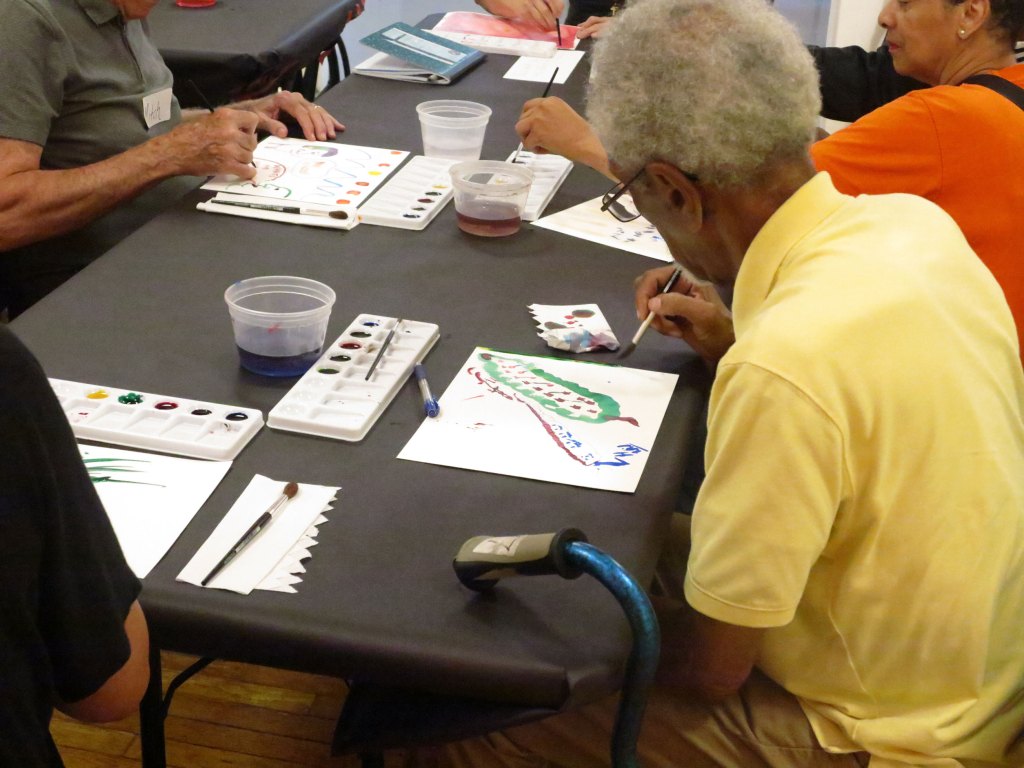
The arts can help address isolation for caregivers and patients, and provide important stimulation and activity. Credit: Arts & Minds
ARTS & MINDS
General Support

Dementia can be a highly stigmatizing and isolating disease. Symptoms range from mild to severe and affect a person’s cognitive abilities including memory and learning, as well as feelings, behaviors, and relationships.[LINK] Research has shown that arts programming can help address issues of stigma, break down isolation for caregivers and patients, and provide important stimulation and activity.
In 2010 Carolyn Halpin-Healy, a seasoned art historian, and Dr. James Noble, a Columbia University neurologist, founded Arts & Minds to improve quality of life for people living with memory loss, Alzheimer’s disease, and other dementias through engagement with art.
“There are oftentimes many years before late-stage dementia where people are able to engage in life and many activities. And if they do so, their symptoms seem to plateau a bit. The acceleration of the symptoms slows down,” Halpin-Healy said. “That’s part of what we’re after.”
In 2010, about 5 million Americans were living with Alzheimer’s disease or other dementias. It’s now nearly 7 million, with about 11 million family members and friends providing mostly unpaid care for those living with dementia.[LINK]
In the Arts & Minds model, the care partners participate alongside the individuals they support, gaining the training needed to encourage and facilitate continued creative activity outside of the session. This approach not only strengthens their bond but also increases the impact of the model.
Population
Older Adults, Caregivers
Discipline
Visual Art
First grant
2018
The Illumination Fund and Arts & Minds
“In 2017, when we were conducting research into the state of arts in health in New York City, we discovered Arts & Minds. We reached out to them early, quickly understanding how their work was transformative,” said Rick Luftglass. “From our first discussions, we saw that our support could help them scale up to reach larger and more diverse audiences.”
Luftglass noted that “programs existed at a few museums across the country — the Museum of Modern Art’s Meet Me at MoMA was a pioneer — but sometimes the museums have difficulty reaching diverse audiences.” He explains that “art museums have been making progress, but they were not typically seen as accessible for poor and underserved communities, nor those whose first language is Spanish. These were actual and perceived barriers to entry.”
To engage with targeted populations, Arts & Minds works closely with specific museum partners in New York City. The Studio Museum in Harlem is the organization’s founding partner and is known internationally for championing the work of Black artists. Another community anchor, El Museo del Barrio, is a leading Latinx cultural center located in East Harlem. In partnership with El Museo del Barrio, Arts & Minds developed Arts & Minds En Español, New York’s first Spanish-language museum program for people living with memory loss.
Arts & Minds prioritizes cultural institutions within Black and Latinx communities, as these populations often experience higher rates of dementia, along with a lack of resources. These programs not only help people with dementia, they also help to reduce the stigma of dementia among those working in cultural spaces and in the community at large.
“I really believe that every museum in the country should throw open their doors to people with dementia and their care partners,” said Halpin-Healy. “We can help them do that.”
Hover or click each decade to reveal the enormous growth
Arts & Minds Sessions
During an Arts & Minds workshop, participants gather around a work of art for a dialogue of response and interpretation. “Some people may have a lot to say and are able to articulate it. Others may be quiet and respond with facial expressions or movements,” Noble explained. After the dialogue, participants engage in an art-making activity related to the themes of the discussion.
“It’s a learning activity. You may come in with your own opinion, or with no opinion, and your understanding of a work of art may shift because of what you’ve heard others say,” Halpin-Healy said. “So, helping people think and share is something that art offers us, and it opens doors to really challenging subjects.”
“As my husband descends into dementia,” one care partner said, “he has lost the ability to structure his days and find meaningful activity. It is incredibly helpful to have a scheduled event in the day that is gentle yet stimulating and involves creative thought as well as active artistic effort. They give us something to look forward to doing together.”
Care partners have been a core part of Arts & Minds sessions since the inception of the program. In 2023, Arts & Minds expanded its support for care partners by launching a support group that now meets monthly at The Met, led by Halpin-Healy and board member/social worker Joyce Visceglia. This diverse group of care partners participates in meditation, explores art in the museum’s galleries, and receives psychosocial support, all while connecting with others facing similar challenges.

“Dementia is a social justice issue. People are stigmatized and marginalized, no matter where they are on the socioeconomic ladder, no matter where they are in terms of racial and ethnic diversity. These, together with the fact that some communities are more heavily affected by dementia, ties into everything else we care about in terms of equity and fairness.”
Carolyn Halpin-Healy,
Co-founder and Executive Director
Arts & Minds
The Pandemic +
The Pandemic
In March 2020, it became clear very early that a shutdown was imminent, and as an epidemiologist, Dr. Noble knew the impact this would have on older residents, including families affected by dementia. Halpin-Healy and her team quickly pivoted programming online. As museums began to shutter their doors, Arts & Minds premiered its first online class.
Arts & Minds expanded programming during the pandemic, varying the format to include movement, music, and virtual studio visits with practicing artists. Through 2022, Arts & Minds offered four programs per week in English and at least one per week in Spanish to help those during the lonely and uncertain time.
“Our commitment has always been to accompany our participants through their individual journeys of life with dementia. I’m really proud that our diverse and amazing team of teaching artists was able to do that. We were fortunate to have the support of an amazing board and generous funders, who really stepped up during the COVID-19 crisis,” Halpin-Healy reflected.
Arts & Minds retained its partnership with museums online, enhancing the participant experience with high-quality digital images provided by those partners. The diversity of the artworks from El Museo del Barrio, the Studio Museum, The Jewish Museum, and The Metropolitan Museum of Art, both online and in-person, allows participants from underrepresented communities to see themselves represented and feel empowered to take part in the discussion.
“Having an online option for an Arts & Minds program is better for some than physically going to a museum because we get so tired these days,” one program participant said.
Indeed, studies have demonstrated that online participation increases accessibility and has the potential to bring programming to audiences worldwide, especially to those in remote or isolated places.
Halpin-Healy and Dr. Noble shared their learnings in the journal Dementia, as co-authors of “Online gallery facilitated art activities for people with dementia during the COVID-19 pandemic and beyond: A narrative review.”
Impact and Studies +
Impact and Studies
Halpin-Healy and her colleagues continuously evaluate the program:
“We experience it together, we observe what happens, we see how it affects individuals, and that has an immediate effect on our practice. We take feedback from each session and modify the program to help as many people as possible, especially those most marginalized. If we can share what we’ve learned, share the practice, share the approach, share all the research we’ve gathered and give that away, then museums anywhere will be able to use that to grow their own programs and meet the needs of their local communities. That’s our vision,” Halpin-Healy said.
Arts & Minds believes that sharing its work and teaching other museums how to create and run their own dementia-supportive programs will generate more research interest in this critical area. Having a broader infrastructure of large-scale programs will provide opportunities for study and more comprehensively demonstrate the benefits of these programs.
Dr. Noble notes that although studies of people with dementia are expanding, many of the studies have small sample sizes. Adding them all together shows a consistent set of positive findings, but they remain limited by the sizes of the individual studies. It’s essential to build the research base so that it is robust enough for the medical community.
Arts & Minds has served as a platform for multiple research studies. One such study gave medical students a survey of their attitudes and knowledge of dementia. After the initial survey, students took part in an Arts & Minds program and then repeated the survey afterwards. The results suggested a favorable increase in the medical students’ attitudes about dementia, especially around comfort with persons with dementia.[LINK]
For many of the medical students, this was their first experience with someone who has dementia outside of a hospital or clinic. Arts & Minds gave these future doctors the opportunity to see firsthand the stages of dementia, and more importantly, that the experience can be filled with joy, laughter, and art. In addition to this change in perspective, several students, after experiencing Arts & Minds, choose to go into fields such as geriatrics or neurology.
Arts & Minds undertook another study inspired by the Studio Museum security staff’s expressions of generosity, awe, and kindness for the Arts & Minds participants. Arts & Minds wanted to know, “what was it about the program that excited staff at the Museum, even though none of them participated in the workshops?”
“We learned that they began to appreciate the Studio Museum as a space of social inclusion and belonging. We learned that it improved organizational pride. Museum staff were touched by the fact that the doors were open to older adults, and that it was reaching members of the immediate community in a very meaningful way,” Halpin-Healy said.
In addition to more organizational and community pride, Studio Museum staff experienced a reduction in stigma toward those with dementia. When they are welcomed and appreciated in this way, those with dementia often feel less ostracized in society and caregivers feel empowered to help their loved ones.
Education And Training +
Education And Training
Arts & Minds is taking a leadership role in training museum and care professionals in its model. They have helped the National Gallery of Art, the New Orleans Museum of Art, the Smithsonian American Art Museum, and the United States Botanic Garden to start programs. Arts & Minds also created Engaging Arts & Minds, which Halpin-Healy describes as “a self-paced, asynchronous, online learning experience to help more museums open their doors to this growing population facing life with a stigmatized, aging-related disease. The course is designed for museum educators, dementia care professionals, artists, and administrators of museums and community/senior centers.
The online platform is already proving to be a useful tool for improving and expanding practice in New York City and it has generated interest in several museums around the country that do not yet serve this population.”
The Case for Arts in Health +
The Case for Arts in Health
The field of Creative Aging, based on engaging in and learning about the arts as we age, has been gaining traction and providing all kinds of ways to experience joy through the arts. Traditionally geared towards the general population of “well elders,” efforts to bring the arts to the lives of people living with dementia have sometimes been overlooked. “We would like to see funders in the fields of arts, health, and the needs of older adults understand and support the tremendous opportunity to improve the quality of life for everyone as we get older by connecting with art and in museums,” said Halpin-Healy. “There’s a lot of life to be lived and we hope Arts & Minds can help keep people out of nursing homes and living comfortably at their homes for longer.”
Dr. Noble noted, “with about one in six of us facing dementia if we live to age 65, it is an unfortunate fact of life that even if not ourselves, then a close friend or family member is likely to develop it. It is a common experience for all of us one way or another as we age. Working together to provide more opportunities for creative engagement can only help support how we age in many ways, including as we face dementia.”
Funding arts within dementia and aging-related health initiatives not only affects those living with dementia. It also affects the people who care for them and can help to improve their quality of life both personally and as caregivers. “So many of us have parents, grandparents, or other loved ones who’ve developed Alzheimer’s or other forms of dementia,” said Luftglass. “We can relate. It’s very personal.”
Support from the Illumination Fund helped
Arts and Minds to:
- Expand its program to Spanish-speakers
- Move its programming online
- Develop Engaging Arts & Minds, an online training course for museum professionals
Measuring Impact +
Measuring Impact
Grantee-Level:
In 2023, Arts & Minds:
- Conducted 180 public programs, online and in person, for approximately 1,534 participants, averaging 12 programs per month. Of those, four per month were conducted in Spanish (Arts & Minds en Español) by native speakers — artists, art historians, and educators. Museum partners include: the Metropolitan Museum of Art, El Museo del Barrio, Studio Museum in Harlem, The Bronx Museum of the Arts, Jewish Museum, and Schomburg Center for Research in Black Culture
- Facilitated an additional 65 community partnership and outreach programs serving an additional 307 participants
- Advanced Engaging Arts & Minds, an online resource and training program to share its methodology beyond its NYC network
Partnerships +
Partnerships
Arts & Minds has partnered with 14 museums to provide free programming, conducted training and professional for staff at 18 museums and cultural sites. Additionally, Arts & Minds provides programming for older adults in community and residential settings. Partners include:
Select a year to see the growth in museum partnerships
Arts & Minds partners with museums to serve people with dementia and their care partners
CARINGKIND
connect2culture®

Issue
People living with Alzheimer’s Disease and other forms of dementia are frequently isolated and stigmatized, especially those in vulnerable communities. They and their caregivers, often family members, may have difficulty accessing quality care and other services.
Read More +
The Organization
CaringKind provides comprehensive, compassionate care and support services to individuals and families affected by Alzheimer’s and other dementias, while also advancing research to eliminate Alzheimer’s disease. Formerly known as the Alzheimer’s Association, New York City chapter, CaringKind’s programs and services include education workshops that help family and friends understand and navigate the challenges of Alzheimer’s disease and caregiving, Dementia Consultations, Early-Stage Services, Care Partner Education, connections to resources, collaborations with research centers, and strategies to increase public awareness and inform public policy through advocacy.
Grant
Purpose: To support the continued capacity building of connect2culture®.
CaringKind’s connect2culture® creates and promotes engaging non-clinical opportunities for people living with dementia and those who care for them, bringing the healing and enriching power of cultural engagement to persons with dementia. Connect2culture® programs stimulate conversation, memories, and connections through shared cultural experiences. These programs include garden walks, dance workshops, music performances, and gallery talks. Connect2culture® collaborates with a wide range of cultural organizations, and its Community Calendar serves as a clearinghouse to promote programs from organizations throughout the city, including Lincoln Center, the Intrepid Sea, Air, and Space Museum, Unforgettable Chorus, New York Pops, the Museum at Eldridge Street, and Orpheus Chamber Orchestra.
Impact
With support from the Illumination Fund, CaringKind expanded connect2culture® to offer programs in Spanish and Mandarin. COVID-19 was especially isolating for vulnerable populations, including those with dementia and their caregivers. Recognizing this urgent need, CaringKind quickly pivoted connect2culture® to a virtual setting, not only maintaining — but growing — its programmatic reach with the strategic addition of connect2culture® Spanish and Mandarin offerings to better serve its growing Latinx and Chinese communities.
Since 2022, connect2culture® has facilitated an online music program, originally planned for in-person sessions, for the Chinese community. Over the past year, the pivot to virtual programming has enabled almost 500 families to engage in singing, memory and story sharing, and endless laughter. Each session, the music therapist who facilitates these workshops invites families to create the next session’s music selection, choosing songs that reminded them of growing up in a particular region of China or Taiwan, and sing them in those dialects and languages.
In 2023, CaringKind expanded programs in northern Manhattan, where there are few to no opportunities for people to enjoy experiences with others who share their circumstances. CaringKind partnered with a ID Studio Theater, another Illumination Fund grantee, to hold workshops twice monthly for the Spanish-speaking communities.


Image 1: Participants make personal connections with original works of art through discussion, art making, and multi-sensory activities. Credit: Jewish Museum. Image 2: Guided art observation stimulates conversation, memories, and connections. Credit: CaringKind
DANCE FOR PD®
Mark Morris Dance Group

Parkinson’s Disease (PD) is a progressive neurodegenerative disorder affecting both physical and cognitive abilities. Symptoms, often starting with tremors, worsen over time, and the diagnosis often becomes central to a person’s identity. PD affects people across all social, ethnic, and economic backgrounds, with 90,000 new cases diagnosed annually in the US, where about 1 million people currently live with the disease.
Stigma and isolation frequently accompany Parkinson’s, affecting both patients and their caregivers, who often bear the brunt of care and support. Vulnerable communities face additional challenges due to limited access to specialized medical care, which leads to delayed diagnosis, treatment, and support programs.
While Parkinson’s is typically associated with aging, 5-10% of cases begin before age 50, with some diagnosed as early as age 40. Early-onset Parkinson’s is often misdiagnosed or overlooked.
Population
Older Adults, Care partners
Discipline
Dance
First grant
2018
Dance for PD®, a program by the Mark Morris Dance Group, offers a research-backed, award-winning approach using dance to help individuals with Parkinson’s and their families. The program addresses symptoms such as balance, cognition, and depression while fostering physical confidence and community. Movement and social activity in these classes have been shown to help slow the progression of Parkinson’s symptoms.
In a Dance for PD® class, everyone — including care partners — participates in movement with music that can provide a respite from this condition, and, along with feeling better physically, the classes help build community and remind people that they are more than a diagnosis.
Created in 2001, Dance for PD® offers free dance, music, and movement classes for people with Parkinson’s and their care partners online globally and at nine locations in New York City, as well as comprehensive teacher training and certification, media resources, and performance activities throughout the year.
When the Illumination Fund team first learned about Dance for PD®, the Fund saw an opportunity to help the program grow and provide even greater access for marginalized communities.
“The neurologists actually saw it with their own eyes, what happened to their own patient. The same person who was shuffling in their office and having trouble with balance – in class, she was walking the floor. Seeing was believing.”
David Leventhal,
Founder and Program Director
Dance for PD®
From Brooklyn to the world – hover or click each circle to see Dance for PD’s reach
The Global Reach of Dance for PD®

“BIPOC individuals typically have less access to healthcare, which leads to a later diagnosis,” said Rick Luftglass. “This leads to worse outcomes.”
Early funding supported Dance for PD®’s general programming in New York City and helped them build capacity to reach more diverse, marginalized communities.
As of 2022, about 40,000 New Yorkers are living with Parkinson’s disease. Of those, about one in four are Spanish speakers and 5% speak either Mandarin and/or Cantonese. [LINK] These numbers do not include the large number of cases that go undiagnosed. The Illumination Fund team committed to helping Dance for PD® reach more Spanish- and Mandarin and/or Cantonese -speaking people with Parkinson’s. To accomplish this, Dance for PD® adopted a multipronged approach: building partnerships, offering professional development opportunities and classes in more languages, and providing multilingual voiceovers for existing classes.
In 2020, Dance for PD® used Illumination Fund support to partner with the Muhammad Ali Parkinson Center in Phoenix, Arizona. Through this partnership, Dance for PD® was able to offer Dance for PD® En Español over Zoom. Illumination Fund support also enabled Dance for PD® to train bilingual dance teachers and to hire multilingual teachers to record voiceovers on pre-recorded programming.
In 2022, Dance for PD® saw a 25% increase in enrollment in online classes in Mandarin, and a nearly 50% increase in online classes in Spanish. Translation proved to be a key path to expanding Dance for PD®’s reach into these often marginalized and difficult to reach communities.
“When I’m on the dance floor I don’t have any symptoms. I don’t have any tremors; I don’t have any balance problems. My cane gets put away and I feel fantastic,” said Nancy Petaja, an 80-year-old Brooklyn resident who participates in the programs at the Mark Morris Dance Center in Brooklyn.
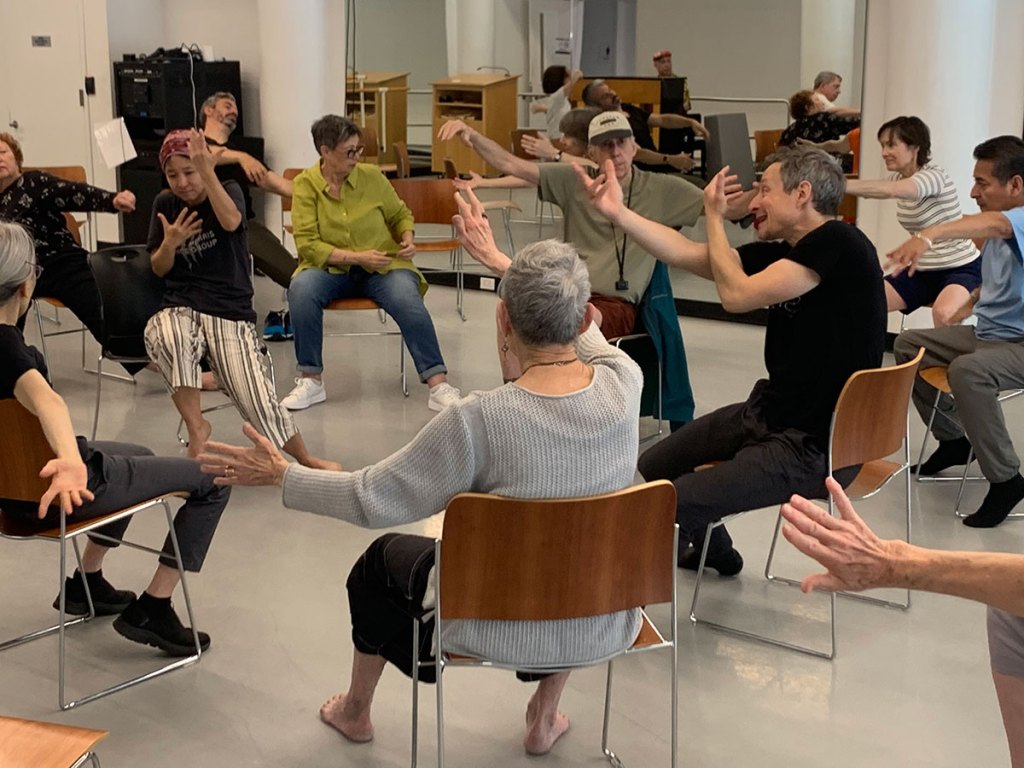
Dance for PD® provides a community that counteracts social isolation. Credit: Dance for PD®
The Experience +
The Experience
Dance for PD® classes begin with a room full of dancers, who are often 60 or older and who are often assisted with walkers or wheelchairs, stretching their arms while seated and listening to live music — drums, piano, or small combos. Care partners often join the session. Teachers design the classes using movements to address specific difficulties that patients are experiencing, although the class is not structured as therapy; throughout, teachers emphasize creativity, artistry, expression, and community. Participants engage in dance as an art form.
The classes are not just about Parkinson’s — they also provide a supportive environment.
“It is a chronic condition that one contends with for decades,” said David Leventhal, a founder and now program director of Dance for PD®: “If you’re not careful, your whole identity ends up being given over to the disease.”
Classes provide a community that counteracts the social isolation that can accompany Parkinson’s.
Global Expansion +
Global Expansion
Because Mark Morris is a touring company, company members who also taught Dance for PD® organically took the course on the road with them.
“In the early 2000s,” Leventhal said, “this was totally novel. There was not a lot of opportunity for people with Parkinson’s to come together and move in any discipline.”
So, as the Mark Morris Dance Company traveled to residencies around the world, it began offering Dance for PD® classes as well. During these residencies, participants expressed eagerness to continue Dance for PD®.
Realizing the demand, Leventhal decided to train local teachers to sustain the program in their own communities, leading to the launch of Dance for PD®’s international program.
Today, Dance for PD® has a global presence, with nearly 400 sites worldwide, robust virtual programming, on-demand videos, Zoom classes, and extensive teacher training programs.
Transformation and Impact +
Transformation and Impact
In a disease like Parkinson’s, the “cure vs. care” model presents a tension. Where arts in health comes in, Leventhal explained, Dance for PD® is on the care side. “Parkinson’s,” Leventhal explained, “is a neurodegenerative disease. It goes in one direction.” Care is critical for managing everyday symptoms and for living well and with dignity.
The Dance for PD® team understood the impact of the program from the start. Teachers see the transformation that happens between the first five minutes of class and the last five minutes of class. Parkinson’s can affect and freeze facial expressions and movement. During class, Leventhal watches participants “express themselves more freely — through their voices, through their faces, and through their bodies.”
In the words of one participant: “I love these classes. They are different from other dance classes because they are intellectually and artistically challenging. The most amazing thing about this class is that I remember quite a bit of the movements that go into the choreography. It is so wonderful to have these activities on a near daily basis.”
Of course, this came as no surprise to Leventhal.
“If you went into a lab and tried to design a really effective and compelling experience for people with this particular challenge, you would come out with something that looks a lot like dance.”
Building Evidence +
Building Evidence
In the early days, Dance for PD® struggled to make the case of the program’s impact to professionals and clinicians in the field. The team gathered anecdotal evidence and participants shared their experiences with their neurologists. A doctor admitted: “Secretly, I love what you’re doing, but I could never talk about this at my practice because people would think that I am recommending something that is frivolous: dance.”
As the program grew, the conversation shifted. Neurologists hearing about the impact of dance from their patients began attending classes for themselves. “The neurologists actually saw it with their own eyes, what happened to their own patient. The same person who was shuffling in their office and having trouble with balance — in class, she was walking the floor,” Leventhal said. “Seeing was believing.”
Beginning in 2008, systematic research began to materialize. One study, published in Frontiers in Aging Neuroscience, found that after even a single class, patients were able to move their limbs more easily, tap their fingers, and change their facial expressions.[LINK]
Dance for PD® is now named in 48 peer-reviewed studies about the impact of dance on people with Parkinson’s disease.[LINK] There are a number of randomized control trials on dance, including the Motor Control Dance research project, led by researchers from Columbia University and Washington University in St. Louis, Missouri. As the research emerged, bridging the gap between the arts and science, neurologists began to refer patients to Dance for PD®.
This shifted the entire environment for Parkinson’s care. Now, from the point of diagnosis, doctors prescribe patients an exercise regimen alongside medication. Dance is now one of the four physical activities specifically recommended by the American College of Sports Medicine for people with Parkinson’s.
As of 2023, physicians and physical therapists are requesting Dance for PD® programs on-site, and health insurance is starting to get involved. Treating Parkinson’s in the US costs an estimated $14 billion annually, with indirect costs like lost productivity adding another $6.3 billion. These figures are expected to rise as the population ages, with Parkinson’s diagnoses projected to double by 2040. Dance can help reduce these costs — Kaiser Permanente has begun funding Dance for PD® programs in San Francisco.
The Pandemic +
The Pandemic
In 2020, as the pandemic began to hit New York City, Mark Morris Dance Group suspended all in-person programming. The Dance for PD® team was quick to respond virtually. Dance for PD® shared its digital library of recorded classes on its main website free of charge.
Recognizing the continued need for interactivity, the team, with additional support from the Illumination Fund and others, launched a robust schedule of livestream/dial-in dance, music, and movement classes. These classes, Leventhal recalled, “quickly became a lifeline for the global Parkinson’s community.”
Each week, more than 600 people from six continents logged in to dance with the group, live, with another 2,500-3,500 people enjoying pre-recorded videos on demand. As the pandemic eventually began to wane, Dance for PD®’s digital and recorded programs continued to provide unprecedented support for the physical, mental, and emotional well-being of its community.
Dance for PD® now offers five volumes of instructional videos, available as DVDs or as streaming / downloadable digital content. About 80% of survey respondents requested that online programming remain, showing that virtual content has expanded access and forever changed how Dance for PD® reaches participants worldwide.
The “Magic” +
The “Magic” of the Illumination Fund Cohort
In 2021, as the pandemic restrictions began to lift, the Dance for PD® team noticed participants were not returning to in-person classes.
Leventhal was concerned. How would he explain this dip to funders? With the Illumination Fund team, however, he felt safe, and turned to them for suggestions. “The team is approachable, kind and generous,” Leventhal said. “They have created an awesome culture with grantees.”
The Case for Arts in Health +
The Case for Arts in Health
The case for arts in health is clear, Leventhal argues.
“As our population ages, many face significant health challenges that seem intractable through a purely medical lens. Focusing on just one solution, like pharmaceuticals or surgery, often addresses only part of the problem.” Arts in health, however, provides a holistic approach to managing and living with health challenges, offering broader solutions when medical answers fall short. As proof, Leventhal offered the words of one Dance for PD® participant: “What I love about the Dance for PD® program is that it doesn’t focus on what’s the matter with us. It asks what matters to us.”
Support from the Illumination Fund helped Dance for PD® to:
- Expand programming to include communities that have not previously participated
- Provide training scholarships to dance teachers of color who wanted to lead Dance for PD® classes in New York City
- Develop Inclusion, Diversity, Equity, Access (IDEA) staff training for the Dance for PD® team and the entire organization
- Participate in conferences, workshops and trainings to connect to the wider field of arts in health and further incorporate DEI into programming
- Launch livestream classes
- Expand non-English resources — including Spanish and Mandarin voiceovers for recorded classes
Measuring Impact +
Measuring Impact
Grantee-Level:
- Engaged 1,800 participants (in person at six New York City locations and virtually or by phone) across 474 classes
- Received 38,000 views of on-demand content in 300 videos via the Dance for PD® website
- Presented eight teacher trainings with 145 introductory workshop participants and 177 continuing education participants; seven full scholarships to BIPOC teaching artists; launched a new partnership with The Kennedy Center to offer an annual training workshop
Building Knowledge +
Building Knowledge
- Dance for PD® is named in 48 peer-reviewed studies about the impact of dance on people with Parkinson’s disease
- Leventhal and staff presented at the 2022 NSF-funded International Workshop on the Neural and Social Bases of Creative Movement; the Davis Phinney Foundation’s Healthy Parkinson’s Communities Leadership Conference; the University of Florida Center for Arts in Medicine and ArtPlace America Creating Healthy Communities Convening; the Parkinson’s and Movement Disorders Alliance; the National Organization for Arts in Health; the Hispanic Leadership Outreach Conference; the World Parkinson’s Congress; and hundreds of training workshops
Dance for PD® uses dance for people with Parkinson’s and their caregivers
DANCES FOR A VARIABLE POPULATION
Moving Minds

Issue
Pre-pandemic, New York City’s older adults faced significant mental health risk factors, including high rates of social isolation and depression. These challenges were more extreme among low-income senior populations, which are Dances For A Variable Population’s primary service cohort. This population has a lower self-perception of their overall health (only 31% of low-income older adults rate their health as excellent, vs 57% overall), are more likely to live alone (53% vs. 32% overall), and have higher rates of depression (16% vs 9% overall).[LINK]
The SILVER Study Among Older New Yorkers found severe impacts of COVID-19 on the mental health of New York City older adults living independently.[LINK] The survey found that 20% of participants aged 70 or older screened positive for depression and 20% for anxiety, more than double pre-COVID rates. Rates were even higher in high-poverty groups: among participants with an annual income less than $25,000, 40% screened positive for depression and 30% screened positive for anxiety, while for participants with income greater than $100,000, 2% screened positive for depression and none screened positive for anxiety. In an earlier study, 50% of those surveyed know someone who died of COVID-19, and 68% reported interacting with people “a lot less” since the onset of the pandemic.
Read More +
The Organization
Founded in 2005, Dances For A Variable Population is a multi-generational dance company and educational organization. It promotes strong and creative movement among older adults of all abilities, enabling them to build creativity, improve their mental and physical health, strengthen social connections, and enhance their quality of life. Since its beginning, Dances For A Variable Population has served more than 5,000 low-income, minority, and underserved older adults across 40 senior centers in New York City.
Grant
Purpose: To support the development of Moving Minds to incorporate a mental health component into its signature Movement Speaks® program.
Movement Speaks®, Dances For A Variable Population’s flagship program, is a sequential 12-35-week program for groups of 10-40 older adults. The curriculum, led by teaching artists, follows a series of movement exercises and individual and collaborative creative movement prompts. The curriculum culminates in the creation of original dance works, which participants perform together.
As mental health challenges exploded during the pandemic, Dances For A Variable Population saw the potential to deepen and extend the benefits of the Movement Speaks® program by integrating a mental health professional to work with the teaching artists. The adaptation was named Moving Minds. Teaching artists were trained to lead discussion groups before and after classes to check in on the participants’ mental well-being, in addition to their satisfaction and engagement with the program.
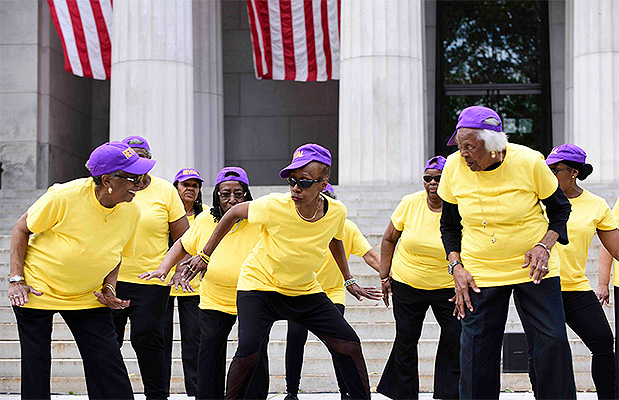
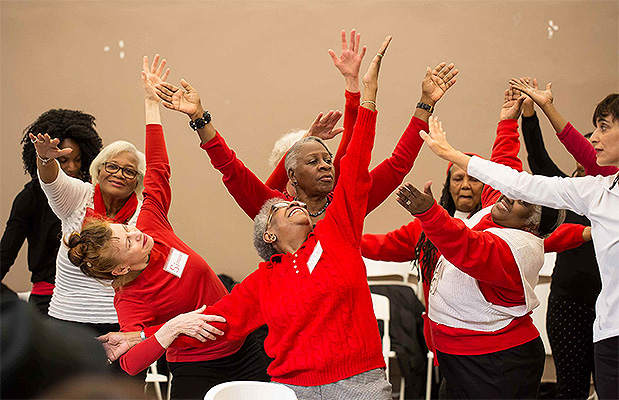
Image 1: Dances For A Variable Population has served more than 5,000 seniors across 40 community sites. Image 2: Moving Minds incorporates a mental health and wellbeing curriculum into its dance classes. Credit: Dances For A Variable Population
Impact
Dances For A Variable Population built an evaluation framework at the beginning of the Moving Minds program, with quantitative and qualitative components. The surveys and focus groups documented a positive impact on mental and physical health and quality of life, including increased confidence, creativity, and positive self-concept, as well as increased social connection.
- Participants rated their physical health as significantly better at the end of the program than before they started the program
- Participants rated their mental health and social life as significantly better at the end of the program
- Participants rated their levels of isolation as significantly less at the end of the program
- Participants reported that they understood dance, were more creative, and learned new dance skills
- Qualitative results indicate a shift from a negative/neutral stance in participants to a positive one
- The feedback from the instructors corresponds with the feedback from the participants
In 2022, Moving Minds was offered at four locations (in the Bronx, Harlem, Queens, and by Zoom). In 2023, Moving Minds expanded to six additional locations (in the Bronx, Harlem, the Upper West Side, the Lower East Side, and Chinatown). The year culminated with the creation of a Moving Minds handbook to remind teaching artists of the new skills and approaches they learned throughout the project.
QUEENS MUSEUM
ArtAccess

Issue
People with varying physical, emotional, cognitive, or behavioral abilities have more difficulty accessing arts programming.
Read More +
The Organization
The Queens Museum is dedicated to presenting the highest quality visual arts and educational programming for the people of New York, and particularly the residents of Queens, the most diverse county in the continental US The Museum’s work honors the history of its site and the diversity of its communities through a wide ranging and integrated program of exhibitions, educational initiatives, and public events.
Grant
Purpose: To support the Queens Museum’s ArtAccess programs, which serve children and adults with varying physical, emotional, behavioral, and cognitive abilities across the New York City area.
In addition to serving visitors on site, in school classrooms, and through online video platforms, ArtAccess provides programming for people in special situations, such as those who are homebound, suffering from extended illness, incarcerated, or in foster care. New programs are serving seniors, including those with cognitive challenges.
Impact
The Queens Museum serves 5,500 individuals with disabilities each year via ArtAccess, offering tours, workshops, and special programs both on and offsite, reaching English, Spanish, Korean, and Mandarin speaking populations. The goal of ArtAccess is to create opportunities for people with disabilities to express themselves creatively, develop new skills, and engage with others.
In 2023, the Queens Museum embarked on a new ArtAccess program for older adults and seniors titled Artistry in Bloom. This program consists of a series of six workshops of 10 weeks each, serving 125 total participants and spanning a range of subjects and disciplines from printmaking, creative jewelry, and mixed media to storytelling, bookmaking, and portraiture. The workshops intentionally facilitate social interaction among participants and with Queens Museum staff.

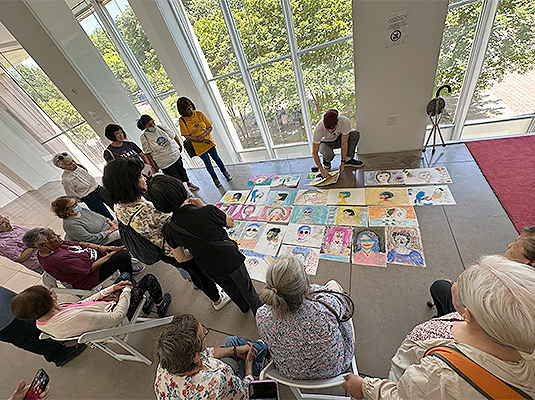
Image 1: The Queens Museum serves 5,500 people each year through ArtAccess. Credit: Queens Museum Image 2: ArtAccess programs serve children and adults with varying physical, emotional, behavioral, and cognitive abilities across NYC. Credit: Queens Museum
THE CREATIVE CENTER AT UNIVERSITY SETTLEMENT
Hospital Artists-in-Residence, Art Workshops, Training Institute
Issue
Many people with chronic illness live alone and, because of their diagnosis and subsequent disability, are often isolated. Sometimes restricted by both physical and psychological limitations, people with chronic illnesses, such as cancer, often lack a robust community of support and encouragement. Art-making can be an important tool to help process and express these circumstances and provide positive distraction and relief. A growing body of research has proven the value of the arts as a treatment modality for a variety of symptoms and for building community among those living with illness, as well as their families, healthcare staff, and the public.
Read More +
The Organization
The Creative Center at University Settlement brings the arts to patients and survivors of cancer and other chronic illnesses, older adults across the aging spectrum, and healthcare staff and administrators. The Creative Center’s programs include hospital artists-in-residence, community art-making workshops in multiple disciplines, creative aging consulting workshops, and professional training. Programs are designed to develop participants’ capacity for expression, build community, and train organizers of arts-in-healthcare and creative aging programs throughout the country.
Grant
Purpose: To provide general operating and program support.
The Creative Center’s workshops, which provide instruction in visual, performing, and literary arts, help people living with and beyond cancer develop creative and technical skills to discover a unique means of recovery and an outlet for expression. Workshops offer participants a “space away from illness,” and a community for sharing concerns, fears, and questions about their illness, diagnosis, treatment, and life beyond illness. Medical staff, social workers, support group leaders, and the hospital artists-in-residence refer patients and survivors to The Creative Center’s workshops. Participants range in age from late teens to those in their nineties and reflect the ethnic and socioeconomic diversity of New York City.
Core Programs
The Hospital Artists-in-Residence Program provides high-quality arts experiences and instruction to patients, their families and caregivers, and healthcare professionals in hospital settings. The Creative Center currently partners with eight hospitals, including Mount Sinai, New York Presbyterian, NYU Langone, and multiple hospitals within the NYC Health + Hospitals system. In addition to hosting workshops for patients, the Creative Center offers workshops to hospital staff, contributing to a richer employee experience and cultivating empathy between patients and their providers.
Art workshops offered at The Creative Center’s studio on Manhattan’s Lower East Side, as well as at community sites and hospitals throughout New York City, are designed to serve participants who are living with and beyond cancer, participants with chronic illness, and their caregivers. Workshops are offered daily, both in-person and virtually.
In addition to running its own programs and providing services in New York City, The Creative Center works to build the capacity of organizations throughout the country to deliver creative aging and arts-in-healthcare programs. Each year, the Training Institute for Arts in Healthcare and Creative Aging invites 40 artists and administrators in these fields for a week-long intensive to learn best practices and the latest research from national leaders.
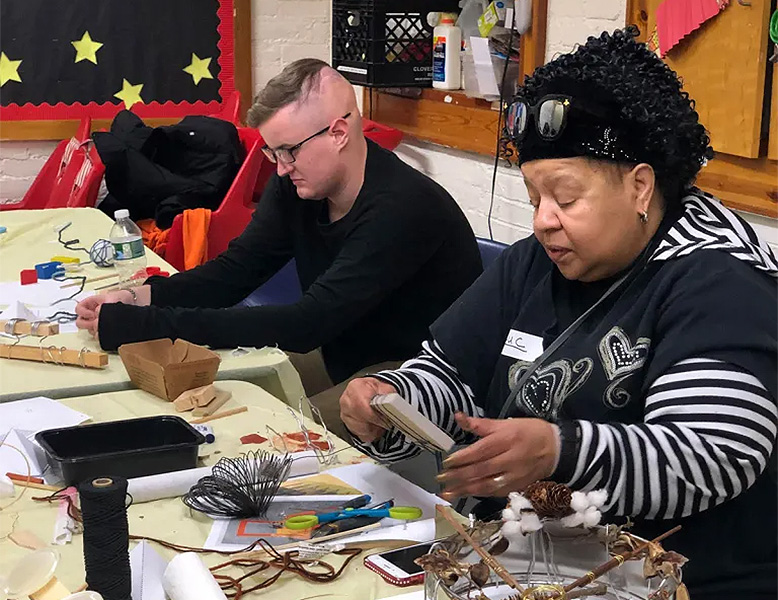
The Creative Center brings the arts to patients and survivors of cancer and other chronic illnesses, older adults across the aging spectrum, and healthcare staff and administrators. Credit: The Creative Center
Impact
Between 2018-2023, the Illumination Fund’s support has helped The Creative Center offer a range of transformative arts experiences including:
- More than 60 hospital artists-in-residence across 30+ sites
- Almost 800 total arts workshops, both in-person and virtual, reaching thousands of attendees
- An average of 35 presenters at each annual Training Institute
Endnotes
Developing the Arts in Health initiative
1. Eddie Torres, “The Role of Arts and Culture in Health,” Grantmakers in the Arts, Accessed May 23, 2019, https://www.giarts.org/blog/eddie/role-arts-and-culture-health
2. Cara James, “NeuroArts Blueprint,” Aspen Institute, Accessed 2021, https://neuroartsblueprint.org/wp-content/uploads/2021/11/NeuroArtsBlue_ExSumReport_FinalOnline_spreads_v32.pdf
3. “Household Pulse Survey, 2020–2024. Anxiety and Depression,” National Center for Health Statistics, accessed on September 16, 2024, https://www.cdc.gov/nchs/covid19/pulse/mental-health.htm
4. “Fauci: Coronavirus Is Shining a Bright Light on Health Disparities,” C-SPAN, Accessed April 7, 2020, https://www.c-span.org/video/?c4867412/user-clip-fauci-coronavirus-is-shining-bright-light-health-disparities
5. “COVID Data Tracker,” Centers for Disease Control and Prevention, accessed September 17, 2024, https://covid.cdc.gov/covid-data-tracker/#datatracker-home
6. Anthony Fauci, “It Ain’t Over Till It’s Over…but It’s Never Over.” New England Journal of Medicine (November 26 2022), https://www.nejm.org/doi/full/10.1056/NEJMp2213814
7. Corrine Thompson, Jennifer Baumgartner, Carolina Pichardo, et al. “COVID-19 Outbreak — New York City, February 29–June 1, 2020.” Morbidity and Mortality Weekly Report 69 (2020): 1725–1729. http://dx.doi.org/10.15585/mmwr.mm6946a2
8. Lunna Lopes, Ashley Kirzinger, Grace Sparks, Mellisha Stokes, and Mollyann Brodie, “KFF/CNN Mental Health in America Survey: Findings,” Kaiser Family Foundation, effective October 05, 2022, https://www.kff.org/report-section/kff-cnn-mental-health-in-america-survey-findings/
9. Vivek Murthy, MD. Onstage conversation with Oprah Winfrey. UCLA, May 4. 2023 (retrieved September 29, 2024) https://www.uclahealth.org/news/article/oprah-winfrey-us-surgeon-general-vivek-murthy-headline-wow
10. “Behavioral Health Needs Are Largely Unmet Across the U.S.,” Pew Charitable Trusts, effective May 22, 2024, https://www.pewtrusts.org/en/research-and-analysis/data-visualizations/2024/behavioral-health-needs-are-largely-unmet-across-the-us
11. Meghan Hamwey, Christina Norman, Rachel Suss, et al, “State of Mental Health of New Yorkers,” New York City Department of Health and Mental Hygiene, effective May, 2024, https://www.nyc.gov/assets/doh/downloads/pdf/mh/state-of-mental-health-new-yorkers.pdf
12. Lunna Lopes, Ashley Kirzinger, Grace Sparks, Mellisha Stokes, and Mollyann Brodie, “KFF/CNN Mental Health in America Survey: Findings,” Kaiser Family Foundation, effective October 05, 2022, https://www.kff.org/report-section/kff-cnn-mental-health-in-america-survey-findings/
13. D. Fancourt and S. Finn, “What is the evidence on the role of the arts in improving health and well-being? A scoping review.” WHO Regional Office for Europe: Health Evidence Network Synthesis Report, no.67 (2019), https://www.who.int/europe/publications/i/item/9789289054553
14. Daisy Fancourt and Saoirse Finn, What is the evidence on the role of the arts in improving health and well-being? A scoping review (Copenhagen: WHO Regional Office for Europe, 2019), Health Evidence Network synthesis report, No. 67. 2. RESULTS, https://www.ncbi.nlm.nih.gov/books/NBK553778/
15. NeuroArts Blueprint: Advancing the Science of Arts, Health, and Wellbeing, The Aspen Institute, (November 2021), https://www.aspeninstitute.org/wp-content/uploads/2021/11/NeuroArtsBlue_Vol2_ExSumReport_v24spreads.pdf
16. NeuroArts Blueprint: Advancing the Science of Arts, Health, and Wellbeing, The Aspen Institute, (November 2021), https://www.aspeninstitute.org/wp-content/uploads/2021/11/NeuroArtsBlue_Vol2_ExSumReport_v24spreads.pdf
Rockefeller Philanthropy Advisors Insights
17. Olga Tarasov, Melissa A. Berman, and Renee Karibi-White, “Operating Archetypes: Philanthropy’s New Analytical Tool for Strategic Clarity,” 2022, https://www.rockpa.org/wp-content/uploads/2022/04/Operating-Archetypes-Philanthropys-New-Analytical-Tool-for-Strategic-Clarity-2.pdf
What Does Impact Look Like?
18. Yasemin Özümerzifon, Allison Ross, Tessa Brinza, Gina Gibney, and Carol Ewing Garber, “Exploring a Dance/Movement Program on Mental Health and Well-Being in Survivors of Intimate Partner Violence During a Pandemic.” Frontiers in Psychiatry, (May 26, 2022), https://pubmed.ncbi.nlm.nih.gov/35722545
19. Judith Bek, Aline I. Arakaki, Fleur Derbyshire-Fox, Gayathri Ganapathy, Mathew Sullivan, and Ellen Poliakoff, “More than Movement: Exploring Motor Simulation, Creativity and Function in Co-developed Dance for Parkinson’s.” Frontiers in Psychology (February 28, 2022), https://www.frontiersin.org/journals/psychology/articles/10.3389/fpsyg.2022.731264/full
20. Li-Li Wang, Cai-Jie Sun, Yan Wang, Ting-Ting Zhan, Juan Yuan, Cong-Ying Niu, Jie Yang, Shan Huang, Ling Cheng, “Effects of dance therapy on non-motor symptoms in patients with Parkinson’s disease: a systematic review and meta-analysis,” Aging Clin Exp Res, no.34 (November 2021): 1201-1208), https://link.springer.com/article/10.1007/s40520-021-02030-7
21. Elizabeth Norton, Ann Hemingway, and Caroline Ellis Hill, “The Meaning and Impact on Well-Being of Bespoke Dancing Sessions for Those Living with Parkinson’s,” International Journal of Qualitative Studies on Health and Well-being, no. 1 (December 2023): https://pubmed.ncbi.nlm.nih.gov/37559339/
Chapter 2: Mental Health
22. “NYC Vital Signs,” New York City Department of Health and Mental Hygiene (June 2015), https://home.nyc.gov/assets/doh/downloads/pdf/survey/survey-2015serious-mental-illness.pdf
23. “Prison Policy Initiative, “Mass Incarceration: The Whole Pie 2019,” Last modified March 19, 2019, https://www.prisonpolicy.org/reports/youth2019.html
24. “Kids,” National Alliance on Mental Illness (NAMI), accessed August 1, 2024, https://www.nami.org/your-journey/kids-teens-and-young-adults/kids/#:~:text=Mental%20health%20conditions%20are%20very,before%20the%20age%20of%2024
25. Vanessa Pinfold, Graham Thornicroft, Peter Huxley, Paul Farmer, “Active ingredients in anti-stigma programmes in mental health,” International Review of Psychiatry, (Summer 2009): 123-131, https://pubmed.ncbi.nlm.nih.gov/16194782/
26. “Mental Health,” U.S. Department of Veterans Affairs, accessed August 15, 2024, https://www.mentalhealth.va.gov/
27. Britt Stigler, “How Gibney Dance Studios Expanded More Than Just Their Footprint,” October 3, 2019, https://www.allarts.org/2019/10/gibney-dance-studios-expanded-more-than-just-their-footprint/
28. All Arts TV, “How Gibney Dance Studios Expanded More Than Just Their Footprint,” October 3, 2019, video, https://www.youtube.com/watch?v=10m6cD3ipgg&t=79s
29. “Intimate Partner Violence Prevention Resource for Action: A Compilation of the Best Available Evidence,” Centers for Disease Control and Prevention, 2017, accessed August 1, 2024, https://www.cdc.gov/violenceprevention/pdf/ipv-prevention-resource_508.pdf
30. Julie Wertheimer-Meier & Edward Hill, “Rates of Intimate Partner Violence Across New York City: An Intersectional Analysis,” NYC Mayor’s Office to End Domestic and Gender-Based Violence, September 2022, https://www.nyc.gov/assets/ocdv/downloads/pdf/Community-District-FA-IPV-Final-Report.pdf
31. “Domestic Violence: Recent Trends in New York,” Office of Budget and Policy Analysis of the New York State Comptroller, October 2023, accessed August 1, 2024, https://www.osc.ny.gov/files/reports/pdf/domestic-violence-recent-trends-10-23.pdf
32. Katherine M. Iverson, Ph.D., “Addressing the Stress and Trauma of Experiencing Intimate Partner Violence,” US Department of Veterans’ Affairs National Center for PTSD, accessed August 1, 2024, https://www.ptsd.va.gov/professional/treat/type/intimate_partner_violence.asp
33. “Impact Report: COVID-19 and Domestic Violence Trends,” Council on Criminal Justice National Commission on COVID-19 and Criminal Justice, accessed August 1, 2024, https://counciloncj.org/impact-report-covid-19-and-domestic-violence-trends/
34. Yasemin Özümerzifon, Allison Ross, Tessa Brinza, Gina Gibney, Carol Ewing Garber, “Exploring a Dance/Movement Program on Mental Health and Well-Being in Survivors of Intimate Partner Violence During a Pandemic,” Frontiers in Psychiatry, May 26, 2022, https://pubmed.ncbi.nlm.nih.gov/35722545/
35. “Reporting Center Data,” Stop AAPI Hate, accessed August 16, 2024, https://stopaapihate.org/explore-our-data
36. “National Latino and Asian American Study,” Mass General Research Institute, accessed August 16, 2024, https://www.massgeneral.org/mongan-institute/centers/dru/research/past/nlaas
37. “Stop AAPI Hate Mental Health Report,” Stop AAPI Hate, May 27, 2021, https://stopaapihate.org/2021/05/27/press-statement-mental-health-report/
38. “New Report: Elderly Asian Americans Report Significant Fear of Physical Assault, Stress and Anxiety,” Stop AAPI Hate, last modified May 24, 2022, https://stopaapihate.org/2022/05/24/release-elder-report-2022/
39. “Mental and Behavioral Health – Asian Americans,” U.S. Department of Health and Human Services Office of Minority Health, accessed August 30, 2024, https://minorityhealth.hhs.gov/mental-and-behavioral-health-asian-americans
40. Boreth Ly, Traces of Trauma: Cambodian Visual Culture and National Identity in the Aftermath of Genocide (University of Hawaii Press).
41. “From Innovation to Integration,” City of New York, accessed August 15, 2024, https://mentalhealth.cityofnewyork.us/integration
42. Patrick Corrigan, PsyD, “Fighting the stigma of mental illness, with Patrick Corrigan, PsyD,” interviewed by Kim Mills, Speaking of Psychology, American Psychological Association, February 2022, https://www.apa.org/news/podcasts/speaking-of-psychology/mental-illness-stigma
43. “Survey: Americans Becoming More Open About Mental Health,” American Psychological Association, last modified May, 2019, https://www.apa.org/news/press/releases/2019/05/mental-health-survey
44. “Forum Theater,” Involve UK, accessed July 31, 2024, https://www.involve.org.uk/resource/forum-theatre
45. Aaron Samuel Breslow, PhD, Sherry Simkovic, BA, Peter J. Franz, PhD, Elizabeth Cavic, EdM, MA, Qi Liu, PhD, Natalie Ramsey, MD, PhD, Jonathan E. Alpert, MD, PhD, Benjamin Le Cook, PhD, and Vilma Gabbay, MD, “Racial and Ethnic Disparities in COVID-19-Related Stressor Exposure and Adverse Mental Health Outcomes Among Health Care Workers”, The American Journal of Psychiatry, no. 12 (November 9, 2023), https://ajp.psychiatryonline.org/doi/abs/10.1176/appi.ajp.20220180
46. “Latinx/Hispanic Communities and Mental Health.” Mental Health America, accessed August 1, 2024, https://www.mhanational.org/issues/latinxhispanic-communities-and-mental-health
47. Ibid.
48. “Health of Indigenous Peoples of the Americas Living in New York City,” NYC Health, December 2021, https://www.nyc.gov/assets/doh/downloads/pdf/episrv/indigenous-peoples-health-2021.pdf
49. “Indigenous,” National Alliance on Mental Illness, accessed August 16, 2024, https://www.nami.org/your-journey/identity-and-cultural-dimensions/indigenous/
50. German Lopez and Ashley Wu, “Covid’s Toll on Native Americans,” New York Times, September 8, 2022, https://www.nytimes.com/2022/09/08/briefing/covid-death-toll-native-americans.html
51. Rhitu Chaterjee, “Hit Hard by COVID, Native Americans come together to protect families and elders,” NPR, November 24, 2021, https://www.npr.org/sections/health-shots/2021/11/24/1058675230/hit-hard-by-covid-native-americans-come-together-to-protect-families-and-elders
52. “Global Refuge calls for additional protections and support for unaccompanied migrant children,” Global Refuge, October 27, 2023, https://www.globalrefuge.org/news/lirs-calls-for-additional-protections-and-support-for-unaccompanied-migrant-children/
53. Camilo Montoya-Galvez, “Immigration Unaccompanied Migrant Children Record Numbers in U.S. Shelter System,” CBS News, October 14, 2022, https://www.cbsnews.com/news/immigration-unaccompanied-migrant-children-record-numbers-us-shelter-system/
55. Charlaine Lasse, MSN, RN, RNC-NIC, “A Chorus of Nursing Voices and the Timeless Truths of Ancient Tragedy,” Off the Charts, (April 11, 2024), https://ajnoffthecharts.com/a-chorus-of-nursing-voices-and-the-timeless-truths-of-ancient-tragedy/
56. Kimberlyn Leary, Ph.D. Mental Health and Girls of Color. The Center on Gender Justice & Opportunity at Georgetown Law, 2020. Accessed August 16, 2024, https://genderjusticeandopportunity.georgetown.edu/wp-content/uploads/2020/06/Mental-Health-and-Girls-of-Color.pdf
57. “Young Women of Color and Mental Health,” The Center for Law and Social Policy, last modified 2018, https://www.clasp.org/wp-content/uploads/2022/01/2018_mentalhealth.pdf
Chapter 3: Aging-Related Diseases
58. “What Is Dementia?” Alzheimer’s Association, accessed August 17, 2024, https://www.alz.org/alzheimers-dementia/what-is-dementia
59. “Alzheimer’s Facts and Figures,” Alzheimer’s Association, accessed August 17, 2024, https://www.alz.org/media/Documents/alzheimers-facts-and-figures.pdf
60. Jack C Lennon, Stephen L Aita, Victor A Del Bene, Tasha Rhoads, Zachary J Resch, Janelle M Eloi, Keenan A Walker, “Black and White individuals differ in dementia prevalence, risk factors, and symptomatic presentation,” Alzheimer’s and Dementia: The Journal of the Alzheimer’s Association, (Summer 2022), https://pubmed.ncbi.nlm.nih.gov/34854531/
61. ”Asian Languages in New York City,” American Asian Federation, accessed August 17, 2024, https://www.aafederation.org/research/asian-languages-in-new-york-city/
62. Ruthann Richter, “A New Rhythm Dance benefits Parkinson’s patients,” Stanford Medicine Magazine, February 17, 2017, http://stanmed.stanford.edu/dance-for-parkinsons-disease-at-the-stanford-neuroscience-health-center/
63. “Research,” Dance for Parkinson’s, accessed August 17, 2024, https://danceforparkinsons.org/resources/research/
64. “Health of Older Adults in New York City,” NYC Health, 2019, https://www.nyc.gov/assets/doh/downloads/pdf/episrv/2019-older-adult-health.pdf
65. “Silver Study Among Older New Yorkers: Summary of Findings Round 2,” icap Global Health, 2022, https://icap-aws-bucket.s3.amazonaws.com/icapcolumbiau/wp-content/uploads/SILVER-Study-Round-2.pdf
Authors and Credits
Including print, web and video
Laurie M. Tisch Illumination Fund
Laurie M. Tisch
Rick Luftglass
Kira Pritchard
Jan Rothschild
Rockefeller Philanthropy Advisors
Sanya Mirpuri
Naamah Paley Rose
Amy Holmes
Contributors
Michelle Bae
Susan Magsamen
Latanya Mapp
Interviews
Rachel Cohen, Common Threads Project
Bryan Doerries, Theater of War
Carlita Ector, Darkness RISING Project
Vesna Golic, Common Threads Project
Karen Gormandy, Fountain House
Carolyn Halpin-Healy, Arts & Minds
Victoria Hristoff, Artistic Noise
Sarah Johnson, Carnegie Hall
Mitchell Katz, NYC Health + Hospitals
David Leventhal, Mark Morris/Dance for PD®
Arnaldo López, Pregones/PRTT
Jorge Merced, Pregones/PRTT
James Noble, Arts & Minds
Yasemin Özümerzifon, Gibney
Liz Rubel, The Creative Center
Cris Scorza, Whitney Museum of American Art
Larissa Trinder, NYC Health + Hospitals
Eric Wei, NYC Health + Hospitals
Rachel Weisman, Fountain House
John Williams, Community Access
Calder Zwicky, Artistic Noise
Design and Graphics
Design: In-House International (weareinhouse.com)
Art Direction: Lope Gutierrez-Ruiz
Senior Designers: Alex Wright, Louis Charles Round
Printed at Branded Visual Solutions, Bohemia, NY
Cover: #120 Sylvamo Accent Cover
Book Block: #100 Sylvamo Accent Text
Copyediting
Nora Connor
Cover and Back Cover
Detail from Circle of Life, mural by Sophia Chizuco at NYC Health + Hospitals/Carter, 2019. Photo by Nicholas Knight
(c) 2024 Laurie M. Tisch Illumination Fund All rights reserved
Videography
Accompanying videos can be found on the Laurie M. Tisch Illumination Fund website
Richard Davis
David Schulder
Arts in Health Initiative Grantees:
2018 – 2024
Across all programs.
Focus Area: Mental Health
Serving: At-risk and System-impacted Youth
Discipline: Visual Art
Focus Area: Mental Health
Serving: At-risk and System-impacted Youth
Discipline: Visual Art
Focus Area: Aging-related Diseases
Serving: People with Alzheimer’s and other forms of dementia, along with their Caregivers
Discipline: Visual Art
✼ CaringKind – connect2culture®
Focus Area: Aging-related Diseases
Serving: People with Alzheimer’s and other forms of dementia, along with their Caregivers
Discipline: Visual Art, Music, Dance
Focus Area: Trauma
Serving: Refugees, Survivors of Gender-based Violence
Discipline: Textile
Focus Area: Mental Health, Stigma
Serving: Youth
Discipline: Filmmaking
✼ Dance for PD (Mark Morris Dance Group)
Focus Area: Aging-related Diseases
Serving: People with Parkinson’s Disease, along with their Caregivers
Discipline: Dance
Focus Area: Mental Health
Serving: Arts Organization Staff
Discipline: Dance
✼ Dances For A Variable Population
Focus Area: Mental Health
Serving: Older Adults
Discipline: Dance
Focus: Mental Health
Serving: BIPOC Communities and Formerly Incarcerated Individuals
Discipline: Music
✼ DE-CRUIT
Focus Area: Mental Health
Serving: Veterans
Discipline: Theater
Focus: Mental Health, Stigma
Serving: Artists with Mental Illness
Discipline: Visual Art
✼ Gibney
Focus Area: Mental Health, Trauma
Serving: Women, Survivors of Gender-based Violence
Discipline: Dance
Focus Area: Mental Health
Serving: Latinx community
Discipline: Theater
Focus Area: Mental Health
Serving: Theater artists, including BIPOC
Discipline: Theater
✼ Kundiman
Focus Area: Mental Health
Serving: Asian American writers
Discipline: Literary
Focus Area: Mental Health, Stigma
Serving: Southeast Asian community
Discipline: Music, Dance, Visual Art
✼ NYC Department of Health and Mental Hygiene
Focus Area: Mental Health, Stigma
Serving: Community members and people with mental illness
Discipline: Visual Art
Focus Area: Mental health and wellness
Serving: Health Care staff, Patients, Community
Discipline: Visual Art, Music
✼ Pregones / Puerto Rican Traveling Theater
Focus Area: Mental Health
Serving: Latinx community
Discipline: Theater
Focus Area: Aging-related Diseases
Serving: Older Adults, Youth, Community
Discipline: Visual Art
✼ Recess
Focus Area: Mental Health
Serving: Court-involved young adults
Discipline: Visual art and performance art
✼ Redhawk Native American Arts Council
Focus Area: Mental Health
Serving: Native American Communities
Discipline: Music
Focus Area: Mental Health
Serving: Asian, Arab, and Latinx Immigrant Communities
Discipline: Theater, Storytelling
Focus Area: Mental Health, Trauma
Serving: Migrant Youth
Discipline: Visual Art, Music, Theater, Architecture
Focus Area: Trauma
Serving: Veterans, Survivors of Gender-based Violence, At-risk Youth
Discipline: Visual Art
✼ The Creative Center at University Settlement
Focus Area: Aging-related Diseases
Serving: Older Adults, Caregivers, Health Care Staff, Artists
Discipline: Visual Art
Focus Area: Mental health, Trauma, Aging-related Diseases
Serving: Health Care staff, Community
Discipline: Theater
Focus Area: Mental Health
Serving: Girls, Young Women, and Nonbinary Youth of Color
Discipline: Theater, Music