Redhawk Native American Arts Council
Program: Arts in Health
Area of Work: Arts
Grant Purpose: Healing through Indigenous Culture and Traditions
Overview:
The Redhawk Native American Arts Council was founded and is maintained by Native American artists and educators. Since 1994, the Council has been dedicated to educating the general public about Native American heritage through song, dance, theater, works of art, and other cultural forms of expression. Redhawk produces four of the largest Native American heritage celebrations in the Northeast. The council also hosts festivals, workshops, theater presentations and educational programs, addressing stereotypes and fostering an awareness of Native cultures from a historical standpoint, with a focus on contemporary cultural practices. The Council represents artists from North, South, and Central America, Caribbean, and Polynesian Indigenous cultures.
The Native American community suffers from profound health disparities, with high rates of diabetes, obesity, heart diseases, drug and alcohol addictions, and mental health conditions. According to the New York City Department of Health and Mental Hygiene (DOHMH), New York City (NYC) is home to the largest urban population of people identifying as Natives, First Nations, and Indigenous peoples of the Americas in the United States. “Indigenous peoples of the Americas living in NYC make many contributions to the cultural and economic life of the city, yet many also continue to experience challenges with accessing resources that promote health. This includes being unable to obtain well-maintained and affordable housing, secure jobs with benefits, culturally appropriate health and mental health care, and traditional foods.”
Culture, and cultural traditions, are an essential anchor for indigenous communities. According to NAMI, “Having a close attachment to land and nature, sharing connectedness with the past and with others in the community, nurturing strong family bonds, following the wisdom of Elders and fostering meaningful traditions are commonly shared as part of one’s Indigenous identity. Many of these shared cultural experiences are protective factors for mental health, but members of Indigenous/Native communities also shoulder many burdens, including economic and political marginalization, education disparities, discrimination and mental health challenges rooted in a long history of trauma.”
COVID-19 has had a particularly devastating impact on the health and mental health of Indigenous communities. According to the New York Times, “Native Americans have died from COVID at one of the highest rates of any race or ethnicity since the start of the pandemic.” Additionally, restrictions and limitations on social gatherings prevented opportunities for community cohesion and resilience. According to Victoria O’Keefe, a member of the Cherokee and Seminole Nations, and a psychologist at Johns Hopkins University, the community suffered from “having a limited ability to get together and gather for things like powwows and ceremonies and other events that really keep us connected.” She added that the community is experiencing “collective grief, especially grief around losing elders and cultural keepers.” NPR
Grant:
Purpose: To support Redhawk Native American Arts Council’s Healing Through Indigenous Culture and Traditions, which will serve indigenous community members across NYC.
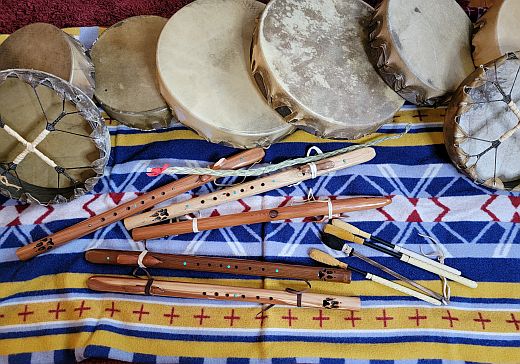
Through the grant, Redhawk worked with community members to create objects that they use in traditional ways to heal, including drums, rattles and wind instruments. The goals of the program were to: 1) foster a connection between traditions and how music can be healing as a community and 2) use songs as a means of storytelling around healing and Indigenous traditions practiced for thousands of years.
Impact:
According to the project director, “Using the drum for healing and physically creating drums, and teaching clients songs, really resonated with them. Participants created flutes and rattles, and then shared songs and taught songs with those. People automatically assume that if you’re Indigenous, you know your tradition and songs, but there are more who don’t than who do. Participant numbers were expected to be about 15, but far more people came and wanted to learn their songs and traditions. Working alongside the New York Indian Council and having them as a partner, they also got to see the results and now their clients are sitting around drums and learning and healing, and the camaraderie was amazing.”