


New York City Department of Health and Mental Hygiene
Program: Arts in Health
Area of Work: Arts
Grant Purpose: NYC Mural Arts Project
Overview
The New York City Department of Health and Mental Hygiene (DOHMH) in collaboration with community-based mental health service providers, including Brooklyn Community Services, Services for the UnderServed (S:US), Acacia Network, VIP Community Services, Community Access, Fountain House, Baltic Street Wellness Solutions, Venture House Staten Island and Fedcap Chelton Loft. The Fund for Public Health in New York served as the fiscal partner for the Illumination Fund’s grant.
In New York City, one in five adults experience a mental health disorder in any given year. According to psychologist Patrick Corrigan, editor of the journal Stigma and Health, “research suggests whether it’s a serious mental illness like schizophrenia or more a benign experience like a reactive disorder, up to 40% of people will not seek out care. Part of the reason is because of stigma.”
There is some indication that there has been progress in combatting stigma against particular forms of mental illness such as depression and anxiety. A 2019 survey by the American Psychological Association concluded that Americans are becoming more open about mental health. “They indicate a willingness to be more open about mental illness, as well as a strong belief among older respondents that having a mental disorder is nothing to be ashamed of.” But the survey also revealed that “Despite this welcome news, some stigma still persists. A third of respondents (33%) agreed with the statement, ‘people with mental health disorders scare me,’ and 39% said they would view someone differently if they knew that person had a mental health disorder.”
Grant
Purpose: To support development of an impact evaluation tool and a Facilitation Guide for certified peer specialists and mural artists to guide the process and activities, including engagement events and workshops.
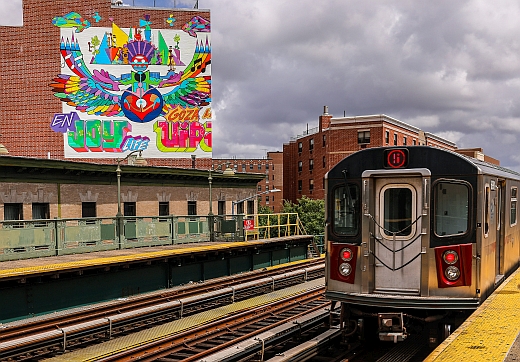
The NYC Mural Arts Project, which was inspired by Philadelphia Mural Project’s Porch Light Program, was developed to address the stigma associated with mental illness by creating opportunities for community members to engage in conversations about mental illness, learn directly from individuals with lived experience, gain an understanding of the neighborhood factors that influence mental health, improve public knowledge of serious mental illness, increase public awareness for mental health service providers within the community and strengthen community resilience to help themselves and each other. Through its 8-month collaborative mural-making process, NYCMAP united individuals living with mental illness, community-based mental health service providers, certified peer specialists, professional mural artists, community organizations and local businesses.
Prior to the development of the Facilitation Manual, the methodology, discussions, training, and metrics varied from site to site. The need for such a guide also had been identified through Yale University’s evaluation of Philadelphia’s Porch Light Program. A researcher who worked on Porch Light’s Final Evaluation Report stated that findings could not be accurately assessed across the various mural sites because Porch Light’s artists did not have a standardized curriculum to guide their activities and project objectives across participating communities.
NYC Mural Art Project’s Facilitation Manual, developed in partnership with Dr. Corrigan based on research into stigma interventions, was designed to be used by all community partners, certified peer specialists, and mural artists in order to ensure intentional mental health discussions, improve the quality and consistency of the activities, enable continuous improvement of the program, and conduct impact assessments.
Impact
A fundamental premise of NYCMAP aligns with Dr. Corrigan’s research that identified that one strategy for reducing stigma is interpersonal contact with members of the stigmatized group. “Members of the general population who meet and interact with people with mental illnesses are likely to show decreased prejudice.”(footnote) Each mural entailed 20-25 community engagement events, workshops, planning meetings, and open studios with the general public . Corrigan also wrote that “contact that includes a common goal, and interactions with a person who moderately disconfirms prevailing stereotypes” are also likely to lessen levels of prejudice. Through the NYC Mural Arts Project, the participants all focused on a specific goal: creating a large-scale mural to raise awareness of mental health and break down stigma by sparking community discussions.
Since the rollout of the manual, significant improvement was observed during these discussion sessions, measured by the increase in:
- Number of questions about mental illness
- Type of questions about mental illness
- Disclosure of personal experiences living with a mental illness and recovery
- Interest by program participants with mental illness to become employed as peer specialists with mental illness to educate their community about mental illness
- Interest by community members to identify mental health service resources to help friends and family.
The evaluation after the first year of the Facilitation Manual found that, of people who participated in the community engagement workshops:
- 65% had a positive change in their stigma towards people with mental illness and
- 58% showed an increase in mental health awareness and education.

Banner photo: mural by Tova Snyder and VIP Community Services
Grantee page photo: mural by Aaron Lazansky-Olivas and Acacia Network